
Last updated September 20, 2026
Full 25-point door and opener safety check with every visit - springs, cables, rollers, tracks, and your LiftMaster or Chamberlain opener included
You get a price before we start. It does not change when the truck arrives.
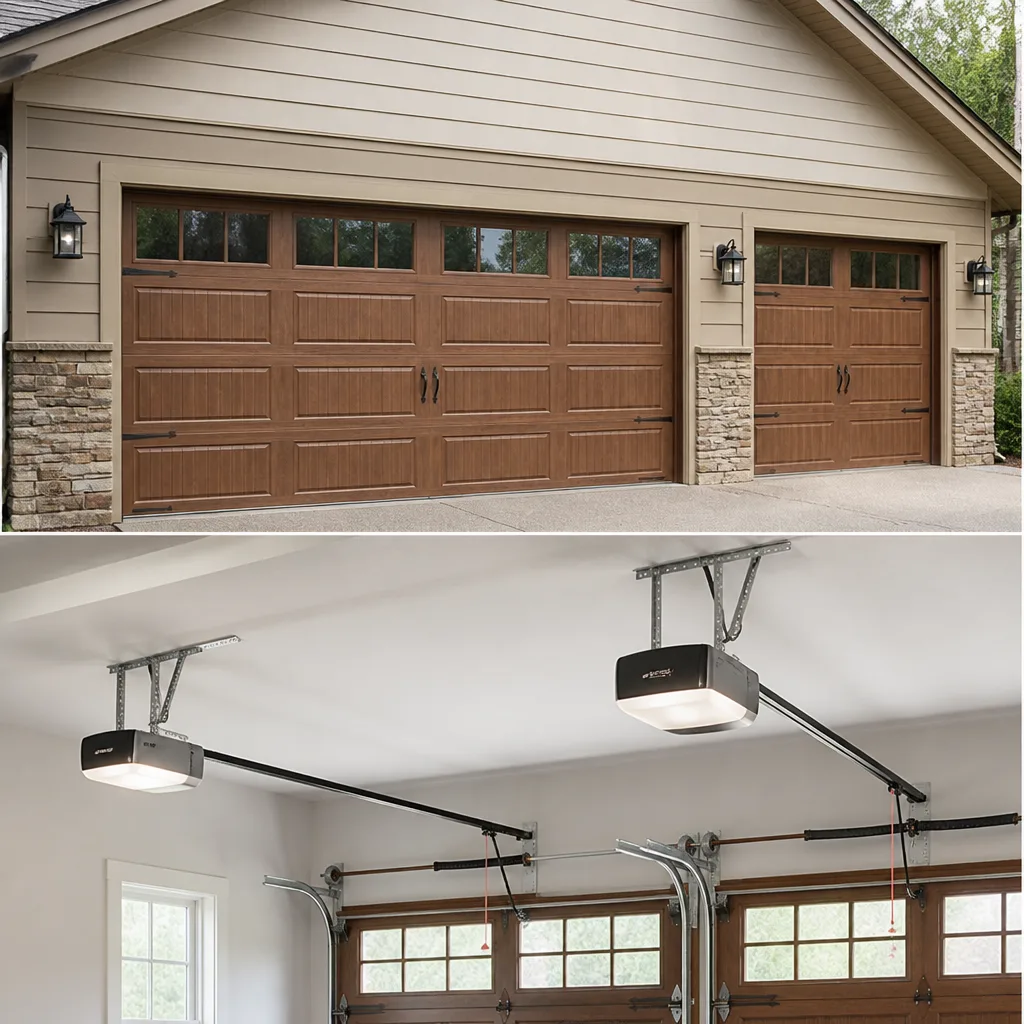
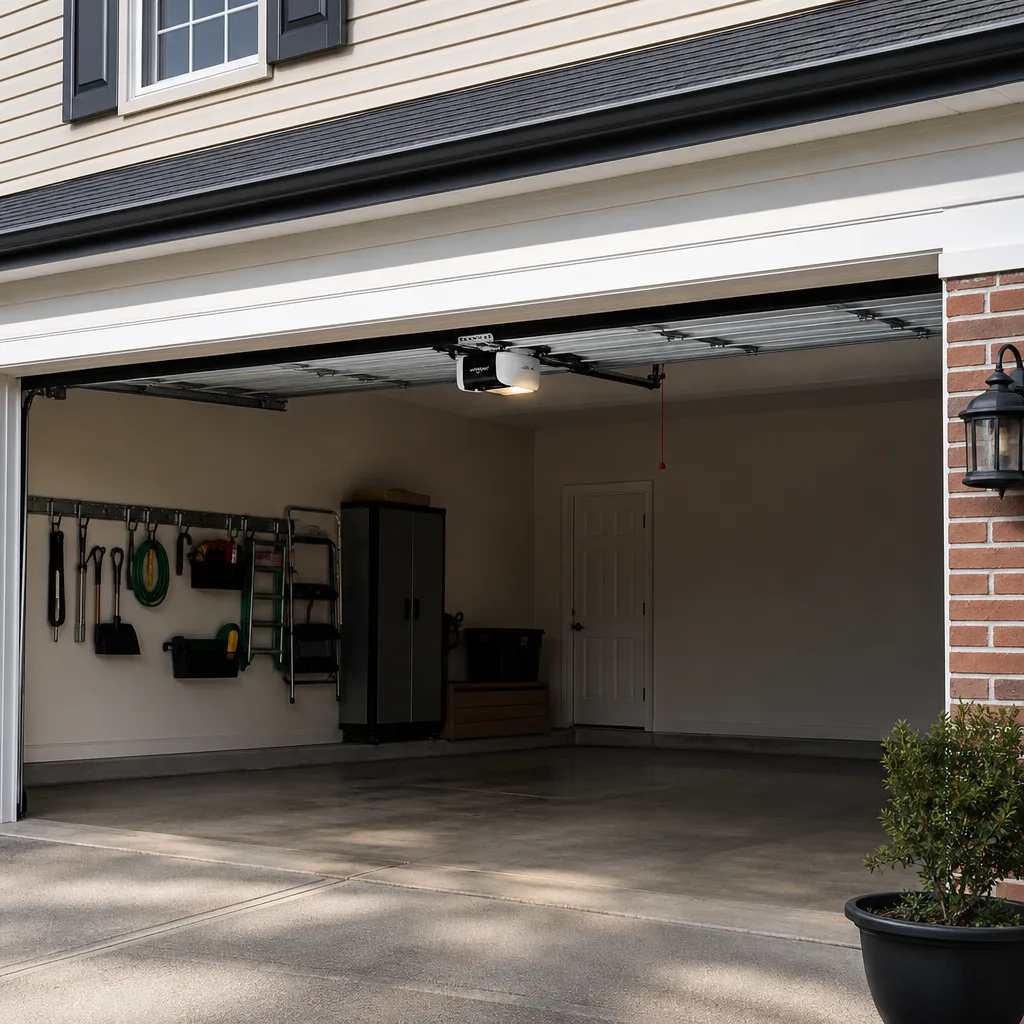
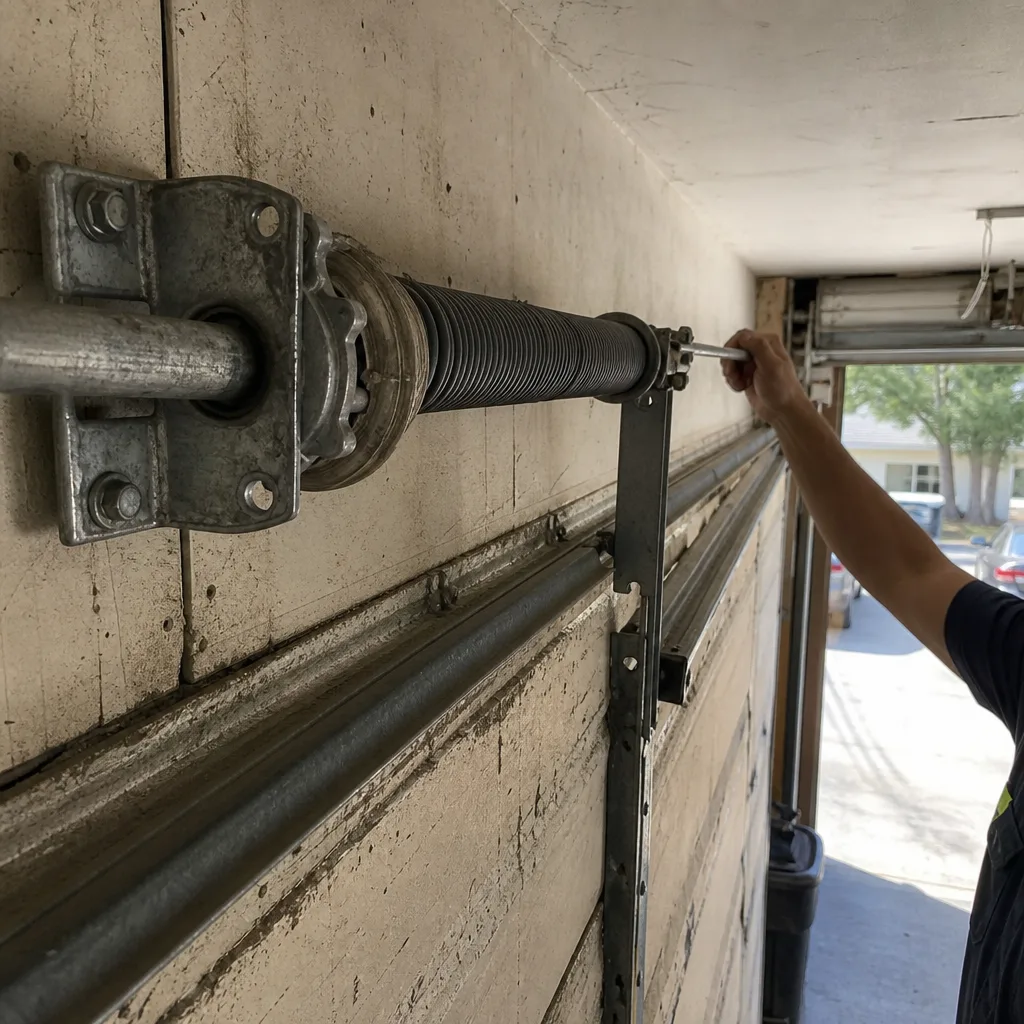 Before
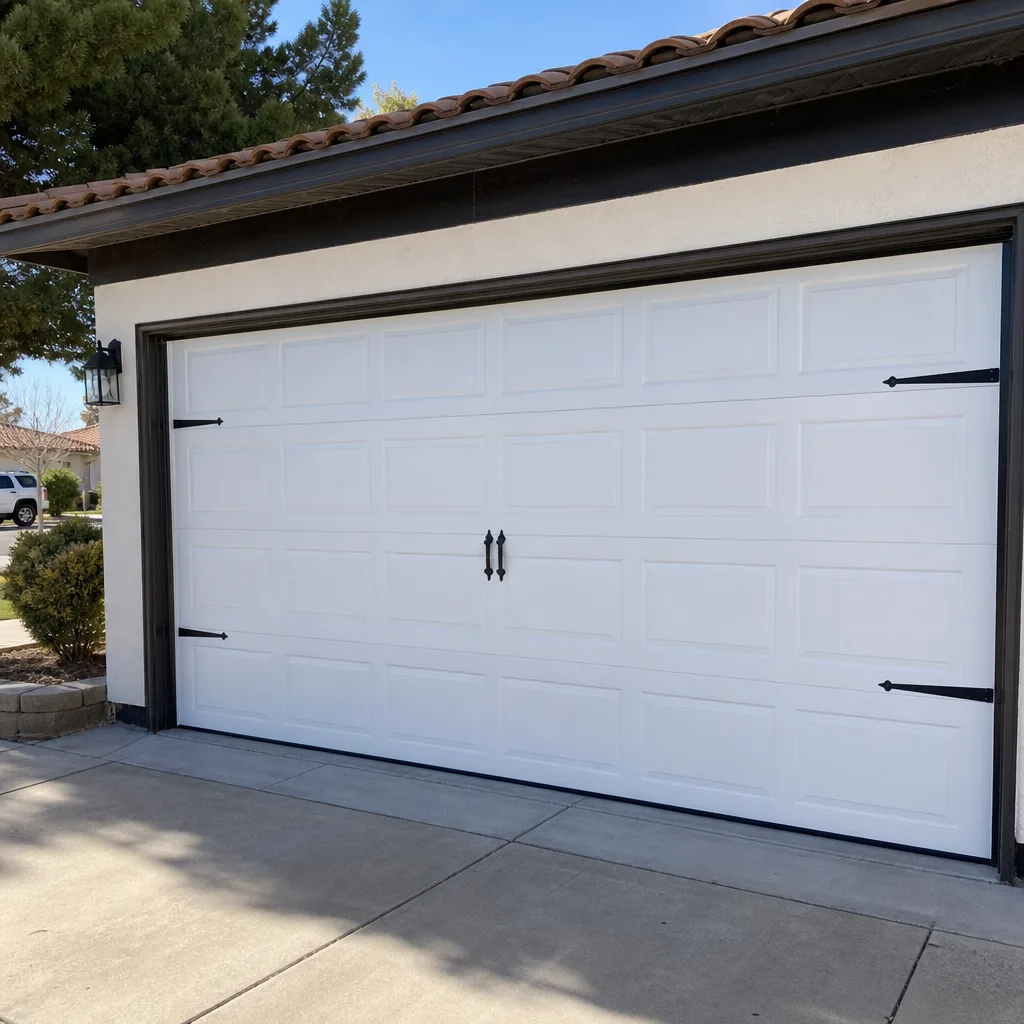 After
After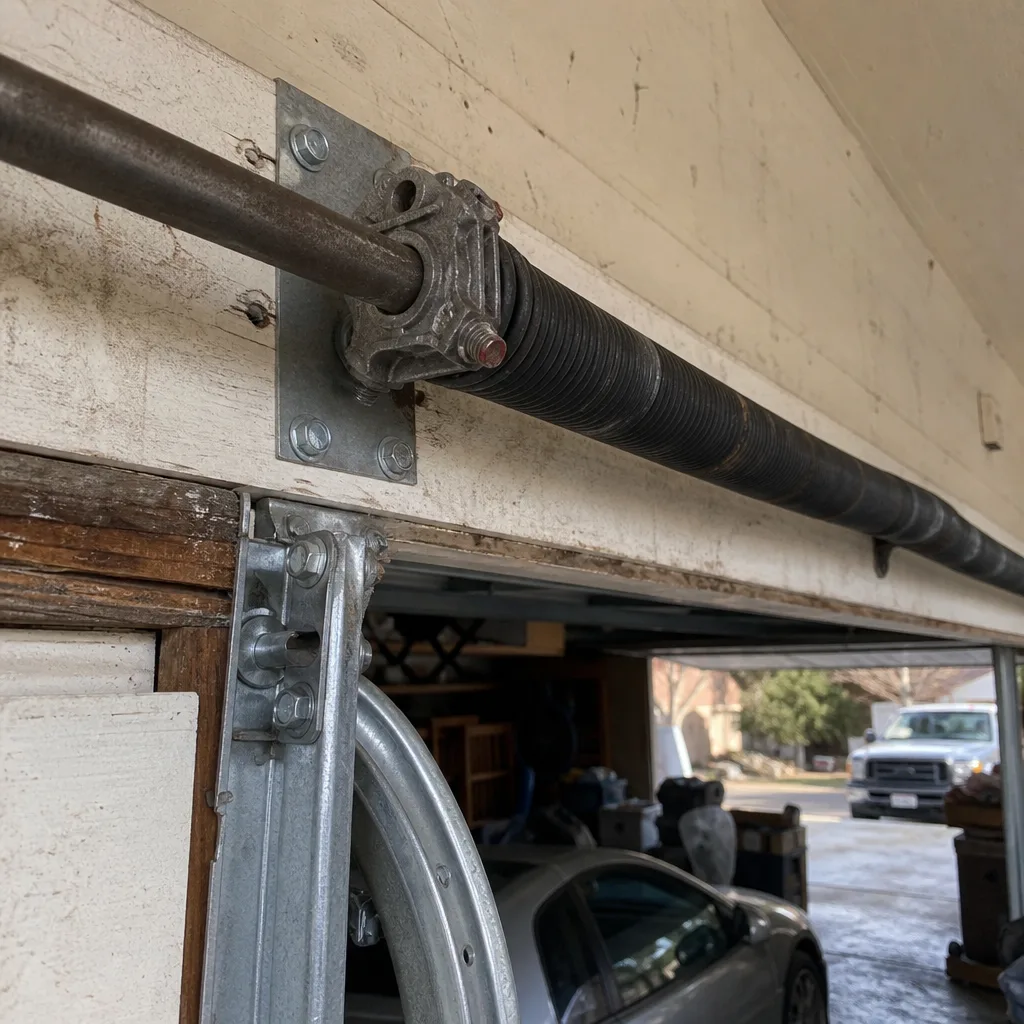 Before
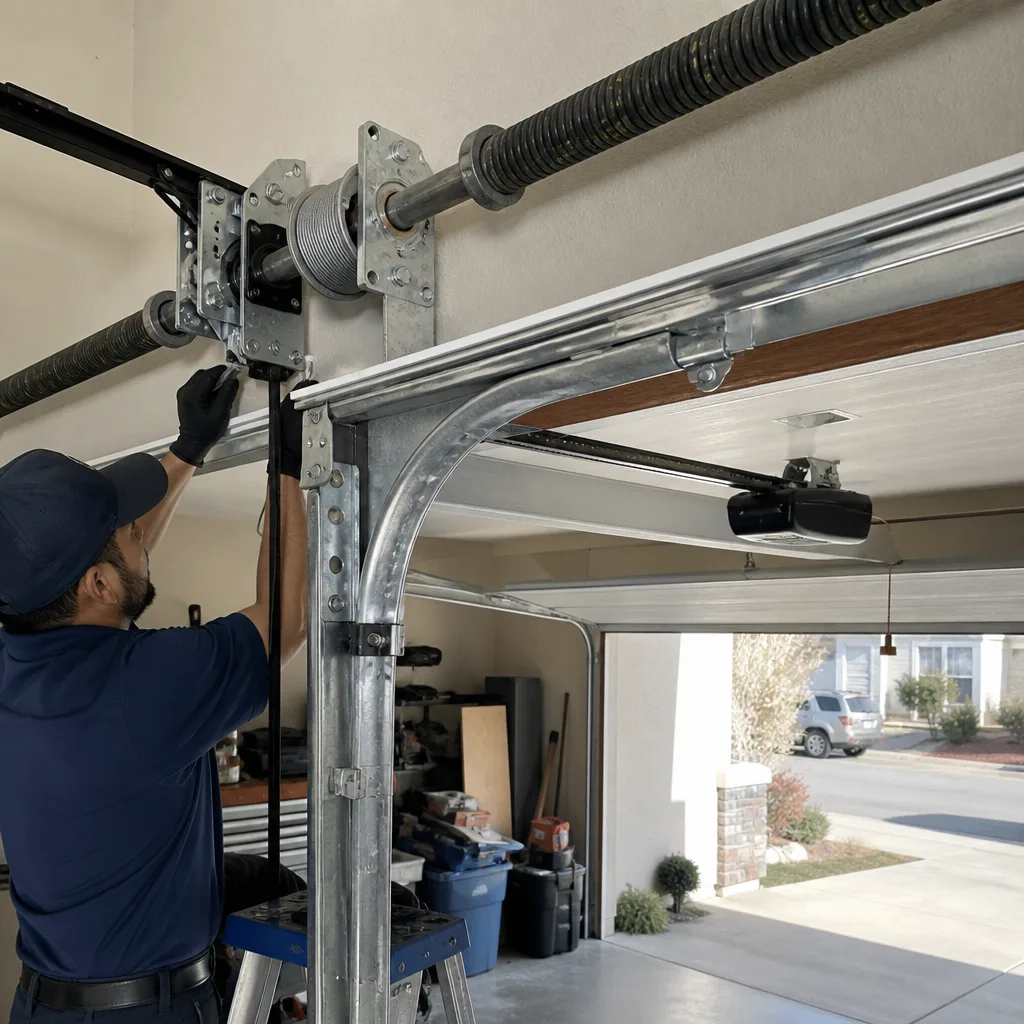 After
After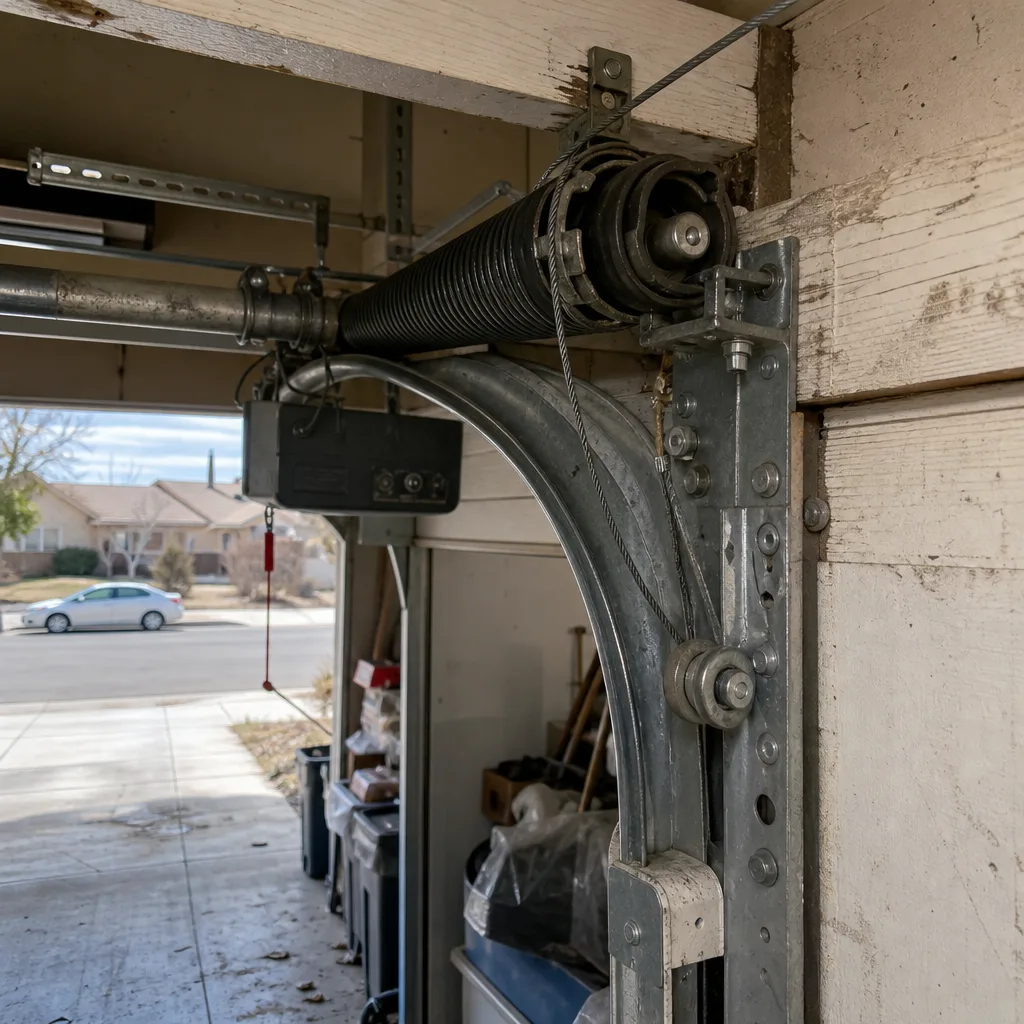 Before
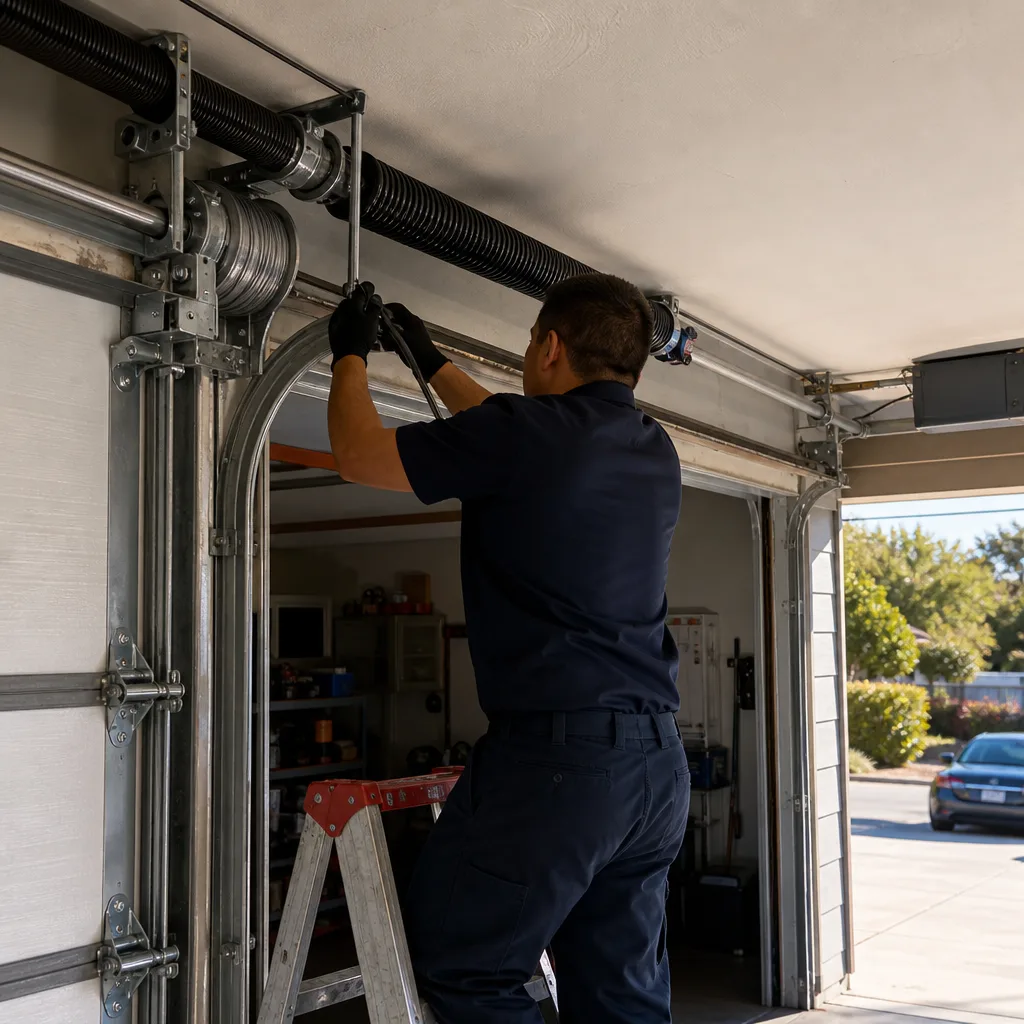 After
AfterGarage Door Permits, Codes & Inspections in CA: What You Need to Know
Unpermitted garage door work is one of the most common red flags flagged during Los Angeles County home resale inspections, and the correction cost falls entirely on the seller. A buyer’s inspector sees a door that doesn’t match the county record, or a header that’s been modified without a permit, and the deal stalls until someone pulls the paperwork. Here’s what surprises most Palmdale homeowners: the permit requirement isn’t as broad as they feared, but it’s not zero either. This guide covers the exact line between work that needs a permit and work that doesn’t, what ‘to code’ actually means for springs and openers under California law, and which records you should keep in a folder after any garage door job. We’re writing this from a Palmdale garage door shop, because the LA County amendments differ from the state baseline, and the Palmdale Building & Safety office has its own fee schedule. For more guides & resources on local garage door requirements, see our blog.dule and turnaround. Knowing the line before you start prevents two things: paying a permit fee you never needed to pay, and discovering during escrow that you should have pulled one and didn’t.
Quick Answer
In California, replacing a garage door with a new door of the same size typically does not require a building permit, but replacing the opener motor or modifying the header above the door often does. Palmdale follows the California Building Code with Los Angeles County amendments, and the practical line is this: if the work changes the structure, the electrical load, or the fire separation between the garage and the house, you need a permit. If it’s a like-for-like door swap with no structural or electrical modification, you usually don’t.
Table of Contents
- When a Permit Is Actually Required in California
- Door Replacement vs. Header Work vs. Opener Installation: The Exact Threshold
- How Palmdale Building & Safety Processes Garage Door Permits
- What ‘To Code’ Means for Garage Door Springs: California’s Torsion-Only Rule
- What Happens When a Permit Inspection Fails: Title, Escrow, and Remediation in LA County
- The Documentation You Should Retain After Any Garage Door Work
- Common Mistakes to Avoid
- When to Call a Professional
- Frequently Asked Questions
 Before
 After
AfterWhen a Permit Is Actually Required in California
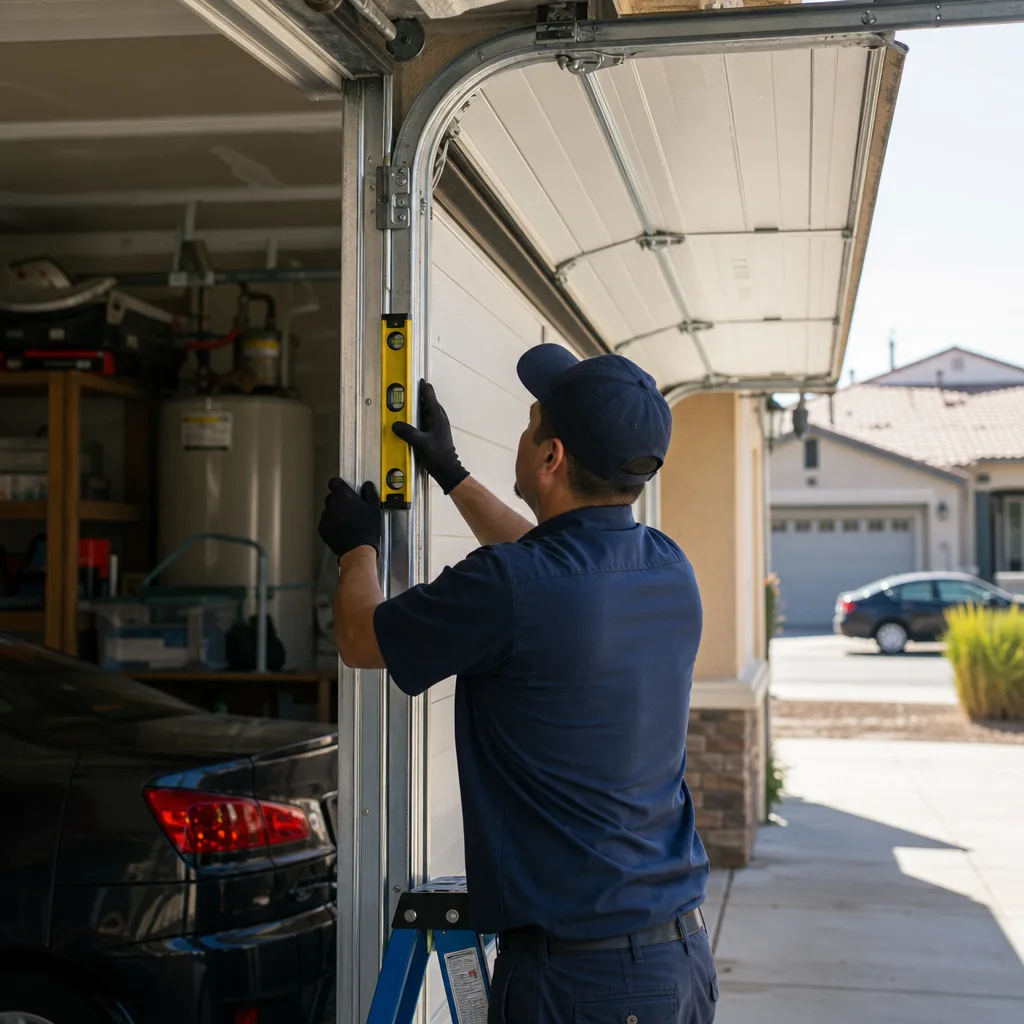
California’s baseline is the California Building Code (CBC), specifically Chapter 1, Section 105, which exempts certain work from permit requirements. The relevant exemption for garage doors appears in Section 105.2, which covers “minor repairs” and “ordinary maintenance.” A garage door panel replacement, when the new door fits the existing opening and uses the existing track, brackets, and opener, generally falls under this exemption. The state treats it as a component replacement, not a structural alteration.
But three conditions pull garage door work back into permit territory. The first is structural modification: if the header above the door is altered, notched, or replaced because the new door is taller or heavier, that’s a structural change, and the CBC requires a permit. The second is electrical work: a new opener circuit, a relocated outlet, or a hardwired battery backup that changes the branch circuit can trigger an electrical permit. The third is fire separation: in Los Angeles County, the wall between an attached garage and the living space is a fire-rated assembly that the county takes seriously. If the door replacement requires changes to that wall, the permit requirement kicks in.
Palmdale, as a city that contracts with Los Angeles County for building services, applies the county’s amendments on top of the state code. The practical result in Palmdale is that most like-for-like door replacements happen without a permit, but any job that touches the header, the fire wall, or the electrical panel gets reviewed. We’ve seen homeowners in Palmdale’s Rancho Vista and Ana Verde neighborhoods replace a 16-foot door with a 16-foot door and sail through with no permit, then a neighbor replaces a 16-foot with an 18-foot and finds out mid-project that the header work requires a structural permit and a plan review. The width of the opening, not the age of the door, is usually the thing that changes the answer.
Door Replacement vs. Header Work vs. Opener Installation: The Exact Threshold
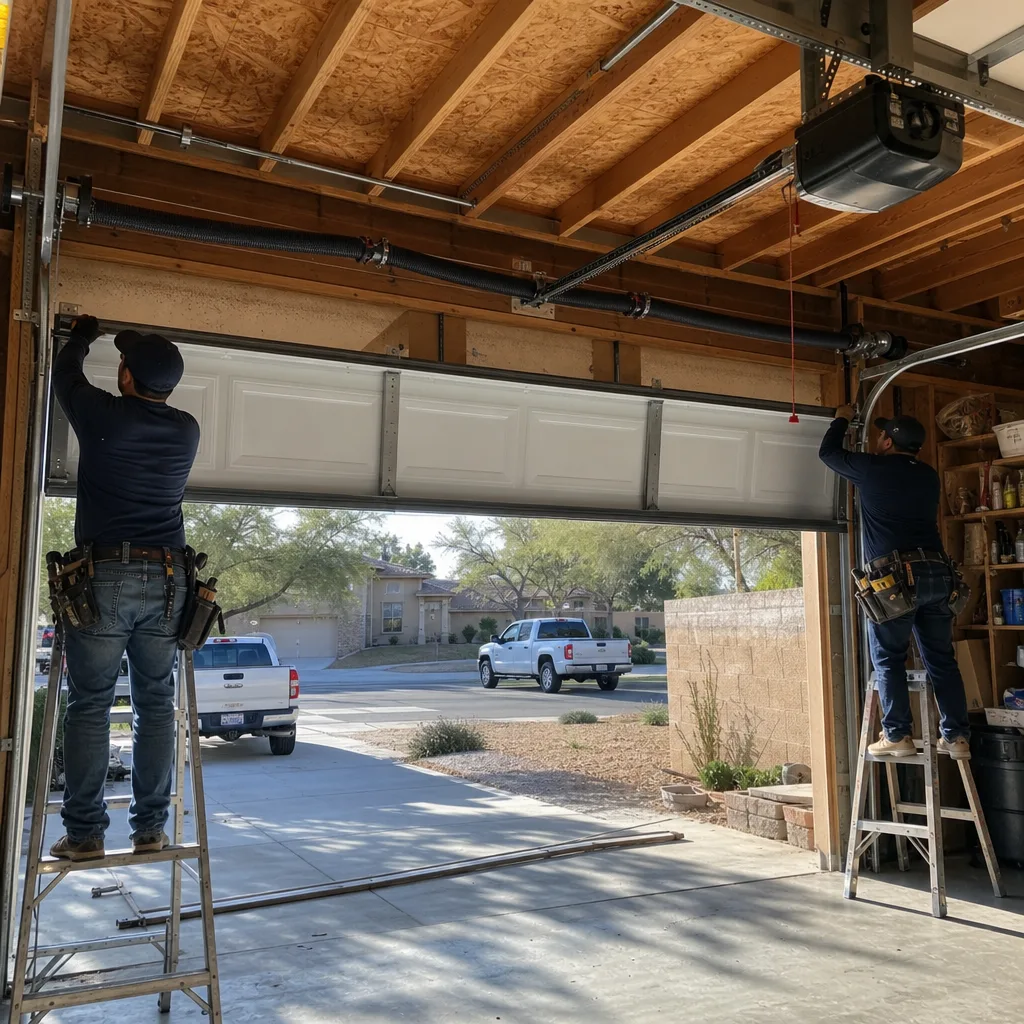
Here’s the line, stated plainly. Replacing a garage door with a new door of the same dimensions, same weight class, and same mounting method does not require a permit in Palmdale under the ordinary maintenance exemption. Changing any of those three variables is where the conversation with Building & Safety starts.
The Three Variables That Trigger a Permit
- Dimensions. A door that’s wider or taller than the existing opening changes the header load. The header above the door carries the weight of the wall and roof above the garage opening. A wider span means that header now carries more load and potentially needs to be upsized. That’s a structural change, and it needs a permit and an engineering check.
- Weight class. A solid wood door weighs substantially more than a steel sandwich-panel door. If the old door was a lightweight aluminum pan door and the new one is a Clopay wood composite, the springs, cables, and header brackets see a different load. This changes the component requirements, and the county wants to review it.
- Mounting method. Standard sectional doors ride on tracks bolted to the wall and suspended from the ceiling by angle iron. A custom or high-lift mount changes where the load lands. If the new mount requires different attachment points or a modified header, that’s a permit trigger in Palmdale.
Opener installation has its own separate logic. A garage door opener is an electrical appliance, and California treats the electrical connection separately from the door itself. If there’s an existing receptacle in the ceiling that the opener plugs into, and the new opener plugs into the same receptacle, you typically don’t need an electrical permit. If the job involves running new Romex, adding a receptacle, adding a dedicated circuit, or hardwiring the opener, the electrical permit applies. In LA County, work on the living-space-adjacent side of the garage wall can also draw scrutiny if the opener has a battery backup that requires a junction box change. The phrase “opener motor replacement near a living space sometimes does require a permit” is true, and the ‘sometimes’ is doing the work: the trigger is the wiring, not the motor.
How Palmdale Building & Safety Processes Garage Door Permits
Palmdale’s building permits run through the City of Palmdale Building & Safety Division, which operates at the City Hall campus on Sierra Highway. Garage door work that requires a permit is usually processed as a residential alteration permit or a residential electrical permit, depending on what the job actually involves.
The Process, Step by Step
- Application. The homeowner or the contractor submits a permit application with a description of the work, the door size, and the opener specifications if applicable. The city’s counter staff review the scope and identify what plan type is needed.
- Plan review (only if structural). If the header is being modified, the city wants a structural plan or an engineered detail. A licensed engineer typically provides the header sizing calculation. This adds lead time: a simple plan review in Palmdale often runs one to two weeks, but it can stretch longer during the summer building season.
- Fee assessment. Palmdale’s permit fees are based on the valuation of the work. A basic electrical permit for an opener circuit typically runs in the low hundreds of dollars. A structural permit for header modification runs higher, with plan review fees added. The city’s fee schedule is published and updated annually, so the number on the wall at City Hall is the one that applies.
- Issuance. Once the fees are paid and the plan is approved, the permit is issued. It includes the inspection schedule: which stages need an inspector to sign off before the next stage proceeds.
- Inspection. For a structural header change, the inspector typically checks the framing and header before the wall is closed up, then a final inspection after the door is hung. For an electrical permit, the final inspection is after the opener is wired and tested.
- Final sign-off. The inspector signs the permit card, and the city records the final approval. That approved permit is the document that matters at resale.
The turnaround question comes up often in Palmdale, and the honest answer is that a simple electrical permit can be issued in a day or two when the application is clean and the work description is clear. A structural header permit with plan review is a longer process, often two to three weeks from application to issuance. If you’re planning a door enlargement before listing your home, start the permit before you schedule the work. The inspection won’t pass without the permit existing, and the escrow timeline won’t wait for a plan review.
What ‘To Code’ Means for Garage Door Springs: California’s Torsion-Only Rule
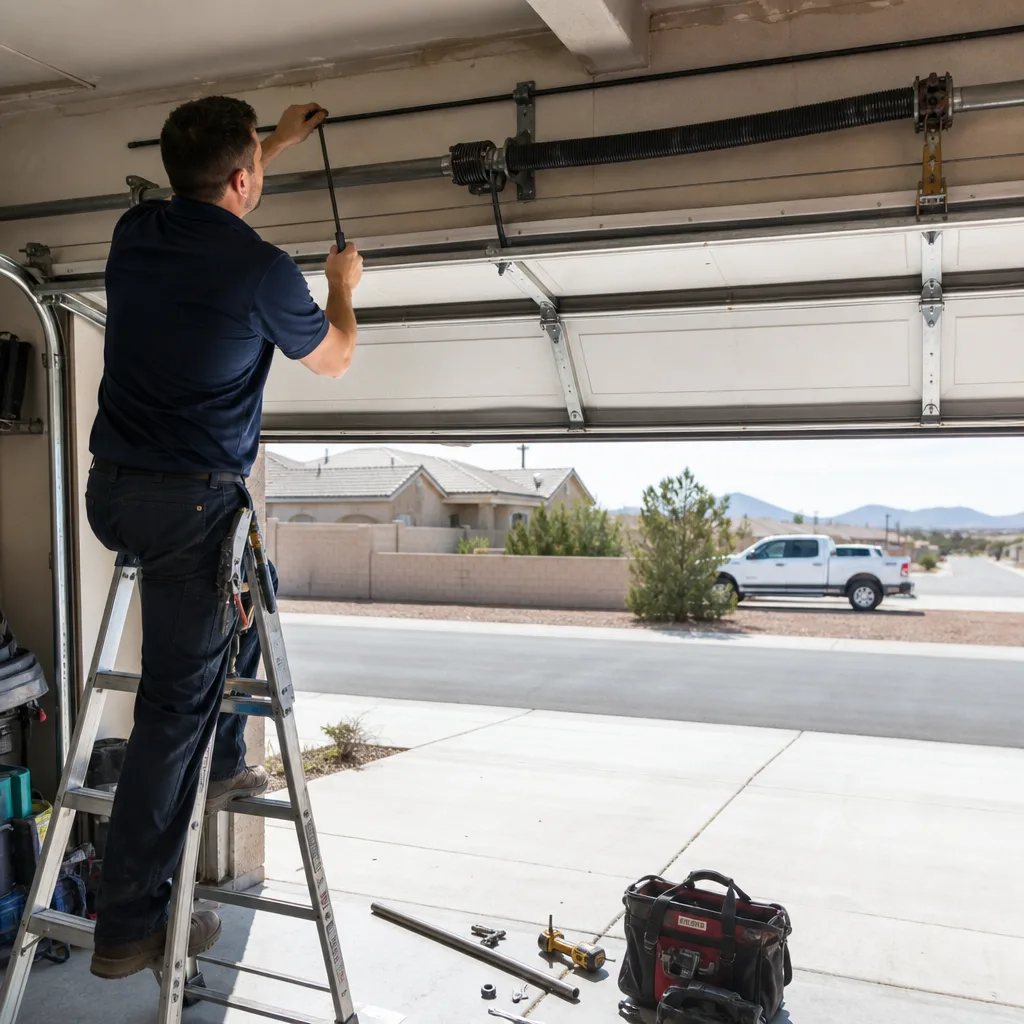
California is unusual among the states in how it treats garage door springs, and this topic matters more than the permit question for safety. The California Building Code requires that new garage door installations use torsion springs, not extension springs. The requirement appears in the CBC’s garage door provisions and is also reflected in the standards referenced by LA County’s residential inspection checklist.
A torsion spring sits on a shaft above the door, wound tightly to store energy, and it is the component that counterbalances the door’s weight. An extension spring stretches along the horizontal track and stores energy the same way, but with a different failure mode: when an extension spring breaks, the spring and its cable fittings can become projectiles. California’s rule exists because torsion springs, when they fail, tend to coil up on the shaft rather than launch into the garage.
The practical consequence for Palmdale homeowners is this: if your house was built before roughly 2000 and the garage still has extension springs, that door does not meet current California code. That doesn’t mean the door is currently illegal to own; code applies at installation and modification, not retroactively to every existing condition in a home. But it does mean three things. First, if you replace that door today, the new installation must use torsion springs, and the inspector will check for that if the job is permitted. Second, if you’re selling the home, a buyer’s inspector may flag the extension springs as a safety item, and many buyers in the Palmdale market ask for spring replacement or conversion before close. Third, if you’re buying a Palmdale home with extension springs, you should budget for a torsion conversion, because the spring system is a safety item, not an aesthetic concern. Review our Garage Door Warning Signs: A Palmdale Homeowner’s Reference Guide for other issues to watch for before purchase.tic preference.
We see Amarr and Wayne Dalton doors in Palmdale from the 1990s still running original extension springs, and the failure mode is predictable: the spring snaps along the track, one side of the door sags, and the opener strains until it strips a gear. The fix is a torsion conversion, which is not a permit-triggering job but is absolutely a code-compliance job. A door that meets current California spring requirements stays salable; a door with 1990s extension springs is a negotiation point waiting to happen.
What Happens When a Permit Inspection Fails: Title, Escrow, and Remediation in LA County
A failed or missing permit on garage door work doesn’t cloud the title in the legal sense; a permit issue is not recorded against the title the way a mechanic’s lien or a tax lien is. What it does is show up in the buyer’s due diligence. In Los Angeles County, the standard residential purchase agreement gives the buyer a window to investigate permits and code compliance, and the county’s building records are accessible through the Department of Public Works and the city’s Building & Safety division. A missing permit for a structural header change or a non-code spring installation is found in that window, and the seller then owns the problem.
The remediation path in LA County follows a predictable sequence. The buyer’s inspector flags the unpermitted work or the code violation. The seller or the seller’s agent pulls a retrofit permit, which the county does issue for existing unpermitted work, but the retrofit permit includes a special inspection that may require opening the wall to see the header, the fire blocking, and the spring assembly. If the inspector finds the work was not to code, the seller pays to bring it to code. If the work cannot be brought to code, the transaction either renegotiates or dies.
Here’s the part that surprises sellers in Palmdale: the retrofit permit often costs more than the original permit would have, because the county charges for the special inspection and the administrative review of previously unpermitted work. The inspection is also more invasive than a normal final inspection. A homeowner who skips a $400 permit on a header modification can end up paying $1,500 or more in retrofit fees and correction work, plus whatever the buyer asks for in the price negotiation. The cheap path was the permit. The expensive path is the retrofit. That math applies to garage door work exactly the way it applies to an unpermitted room addition.
The Documentation You Should Retain After Any Garage Door Work
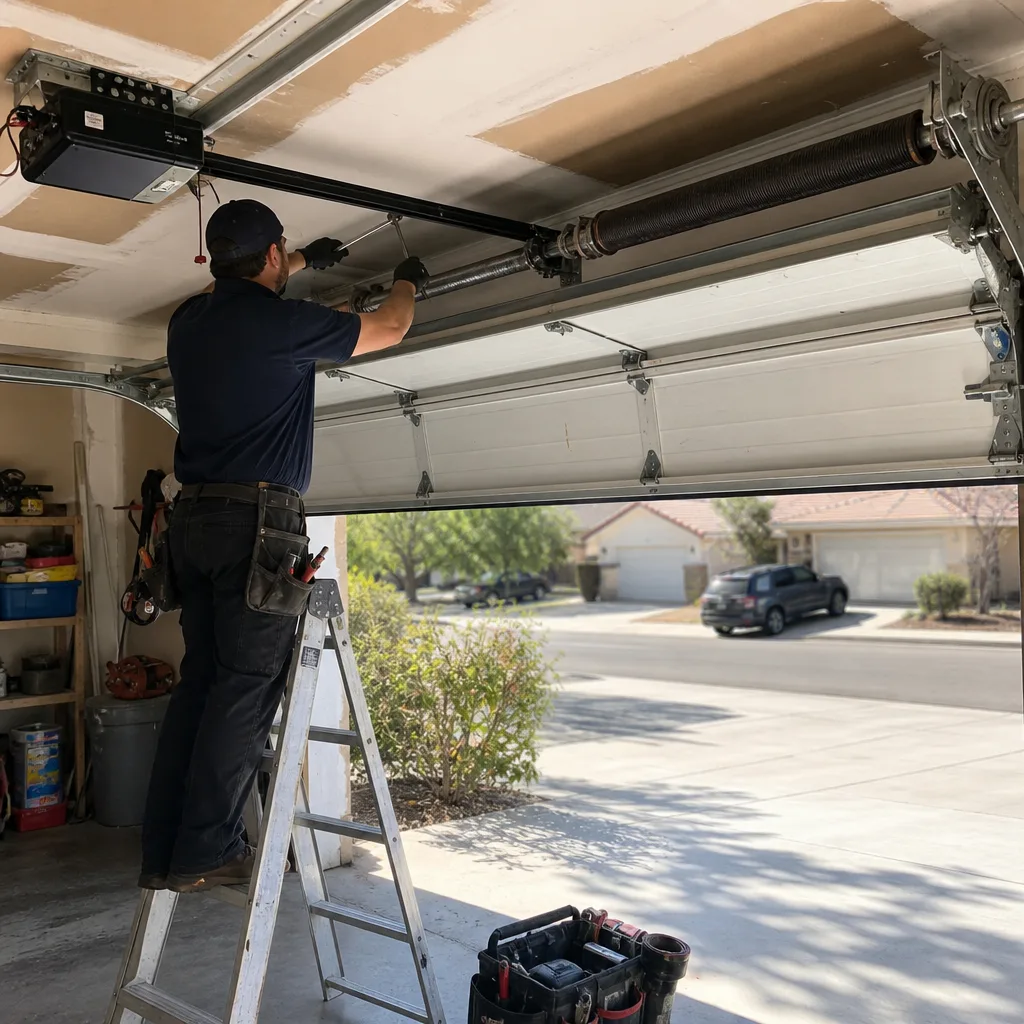
Paperwork is the only thing that survives a sale. When the garage door work is done, whether it was permitted or not, the records you keep determine how clean the resale disclosure looks. Here’s the folder a Palmdale homeowner should keep after any garage door job.
The Retention Checklist
- The permit and the final inspection sign-off. If a permit was pulled, the signed permit card or the county’s online permit record showing final approval is the document. It’s the proof that the work was inspected and passed.
- The written scope and price. A contractor that gives you a flat, written price before the work starts is giving you the document you’ll want at resale: a written description of what was done and what was changed. This is one of the reasons Servo Garage Doors Palmdale writes the scope and the price down before any work starts, under Clause 1 of The Haven Standard. You get a record, not a handshake.
- The photo record. Photographs of the condition before the work and after the work are evidence. If a buyer’s inspector asks whether the header was modified, the photos answer the question without opening the wall. Clause 4 of The Haven Standard is why our technicians photograph the failed component before quoting a replacement, and the customer receives those photos on every visit.
- The warranty. Garage door warranties vary by manufacturer, and a Clopay or Amarr warranty has specific transfer terms at resale. If the warranty is transferable, the paperwork transfers. If it’s not, the buyer should know before they write the offer, not after.
- The spring conversion or code-compliance record. If the door was converted from extension springs to torsion springs, the receipt for that work is a resale asset. It proves the door meets California’s torsion-only requirement, which takes one buyer objection off the table.
None of this requires a permit to be valuable. A like-for-like door replacement with no permit still generates a written scope, a photo record, and a warranty, and those three documents are what the buyer’s inspector wants to see. The difference between a clean disclosure and a contested escrow is usually the file folder, not the permit.
Common Mistakes to Avoid
- Assuming every garage door job needs a permit. A like-for-like door replacement in Palmdale doesn’t need a permit, and paying for one is money you didn’t need to spend. The permit is for structural, electrical, and fire-separation work, not component swaps.
- Assuming no garage door job needs a permit. The header is the line. If the new door is wider or taller and the header gets touched, skipping the permit creates the exact red flag that kills an LA County resale inspection.
- Replacing a pre-2000 door without switching to torsion springs. A door from the 1990s with extension springs can be replaced, but the new installation needs torsion springs under California code. Reusing the old extension system is a code violation and a safety liability.
- Letting a contractor pull a permit in your name without seeing the paperwork. The permit should list the actual contractor and their license. If the permit doesn’t match the work, the homeowner owns the discrepancy at resale.
- Failing to keep the final inspection sign-off. The permit is the beginning of the process, not the end. The final inspection sign-off is the document that proves the work passed. Without it, the permit doesn’t close the loop.
- Upgrading an opener and ignoring the electrical circuit. A new opener that plugs into an existing receptacle is unpermitted electrical work. A new opener that requires new wiring is a different job, and the electrical permit is separate from any door work.
- Hiding unpermitted work from the seller’s disclosure. LA County’s standard disclosure asks about work done without permits. Answering honestly is cheaper than a post-close correction demand, and the retrofit permit path is worse than just pulling the original one.
When to Call a Professional
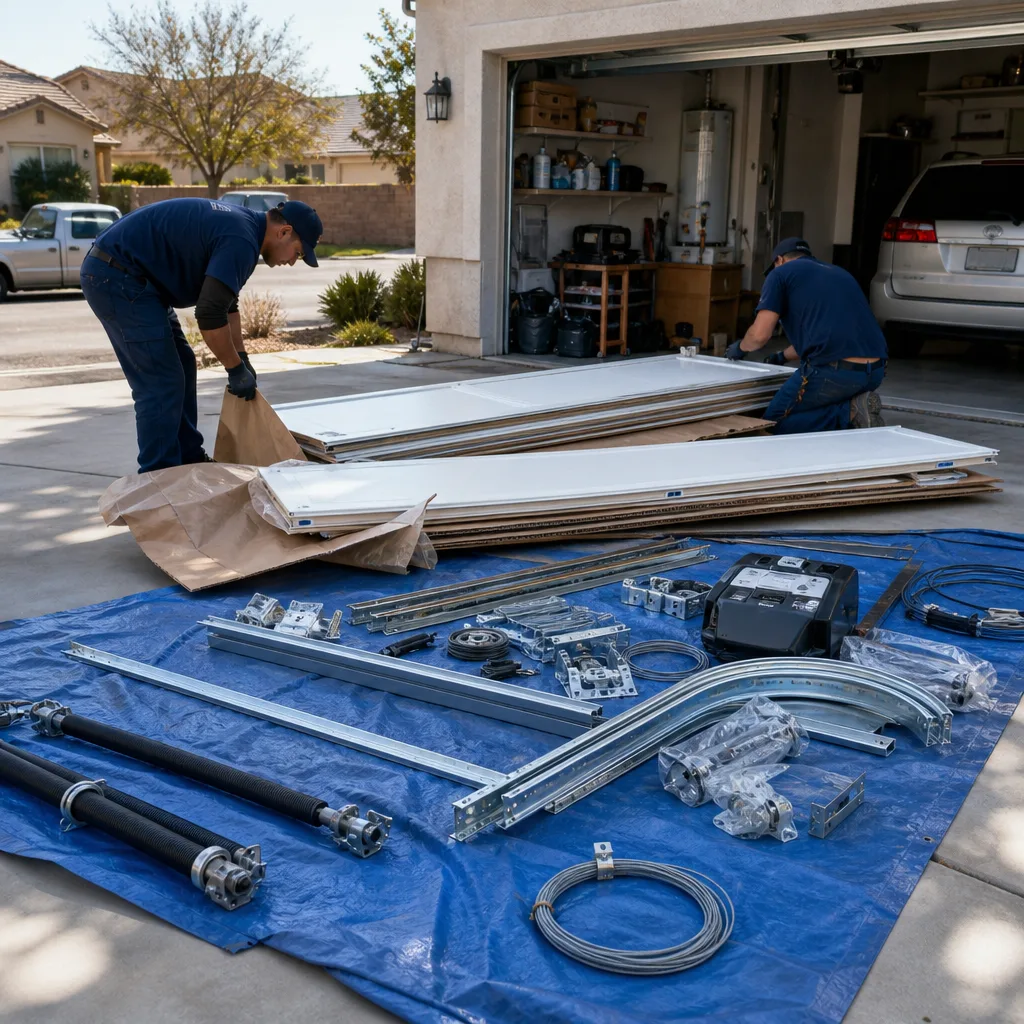
If the work touches the header, the fire wall, or the electrical panel, this is the point where a professional opinion costs less than a plan review. A contractor who has pulled garage door permits in Palmdale can look at the opening, tell you whether the header will need engineering, and give you the written scope that the city’s counter staff want to see. See How to Hire a Garage Door Contractor in Palmdale: A Step-by-Step Guide for what to ask before you sign. If the door has extension springs and you’re planning a replacement, a torque conversion is a job for a trained technician; the springs store enough energy to cause serious injury, and a real expert will tell you that plainly. Servo Garage Doors Palmdale offers free estimates in Palmdale; call (661) 449-2581 and you’ll get a flat, written price and a written scope before any work starts, per Clause 1 of The Haven Standard. We’ll also tell you if the job doesn’t need a permit, because charging for a permit that isn’t required is not how we work.
Frequently Asked Questions
No, not for a like-for-like replacement of the same size, weight class, and mounting method. The California Building Code’s ordinary maintenance exemption covers component swaps, and Palmdale’s Building & Safety division follows that same line. You need a permit only if the header, the fire wall, or the electrical circuit is modified. Call (661) 449-2581 if you want us to look at the opening and tell you straight before you call the city.
A basic electrical permit for an opener circuit in Palmdale typically runs in the low hundreds of dollars; a structural permit for header modification runs higher with plan review fees added. The city’s fee schedule is published at City Hall and updated annually, so the exact number depends on the valuation of your specific work. Estimates are free at Servo Garage Doors Palmdale, and we’ll quote the permit scope accurately before you apply.
Not if the new opener plugs into an existing ceiling receptacle and no wiring is modified. If the job involves running new wire, adding a receptacle, adding a dedicated circuit, or hardwiring the opener, that electrical work needs a permit even though the door itself doesn’t change. The motor is the tell: wiring changes trigger the permit, not the motor swap.
No for new installations. California requires torsion springs on garage door installation and conversion work under the CBC provisions. Existing doors with extension springs are grandfathered, but a replacement today must use torsion springs, and a buyer’s inspector in Los Angeles County will flag extension springs as a safety item if they’re still there at resale.
Yes, in most Los Angeles County transactions. The buyer’s inspector checks the county permit records during due diligence, and a structural header change without a permit is one of the more common red flags. The remediation is a retrofit permit with an invasive inspection, and it costs more than the original permit would have. Sellers in Palmdale pay less when the paperwork is already in the folder.
Yes. If a prior job was flagged during escrow or an inspector found a code issue, we’ll assess the door, spring assembly, and opener, and put the correction scope in writing with a flat price before we start. Call (661) 449-2581 and we’ll schedule the estimate; we serve all of Palmdale’s residential areas and carry parts for the major brands including Clopay, Amarr, and Wayne Dalton.
The Bottom Line
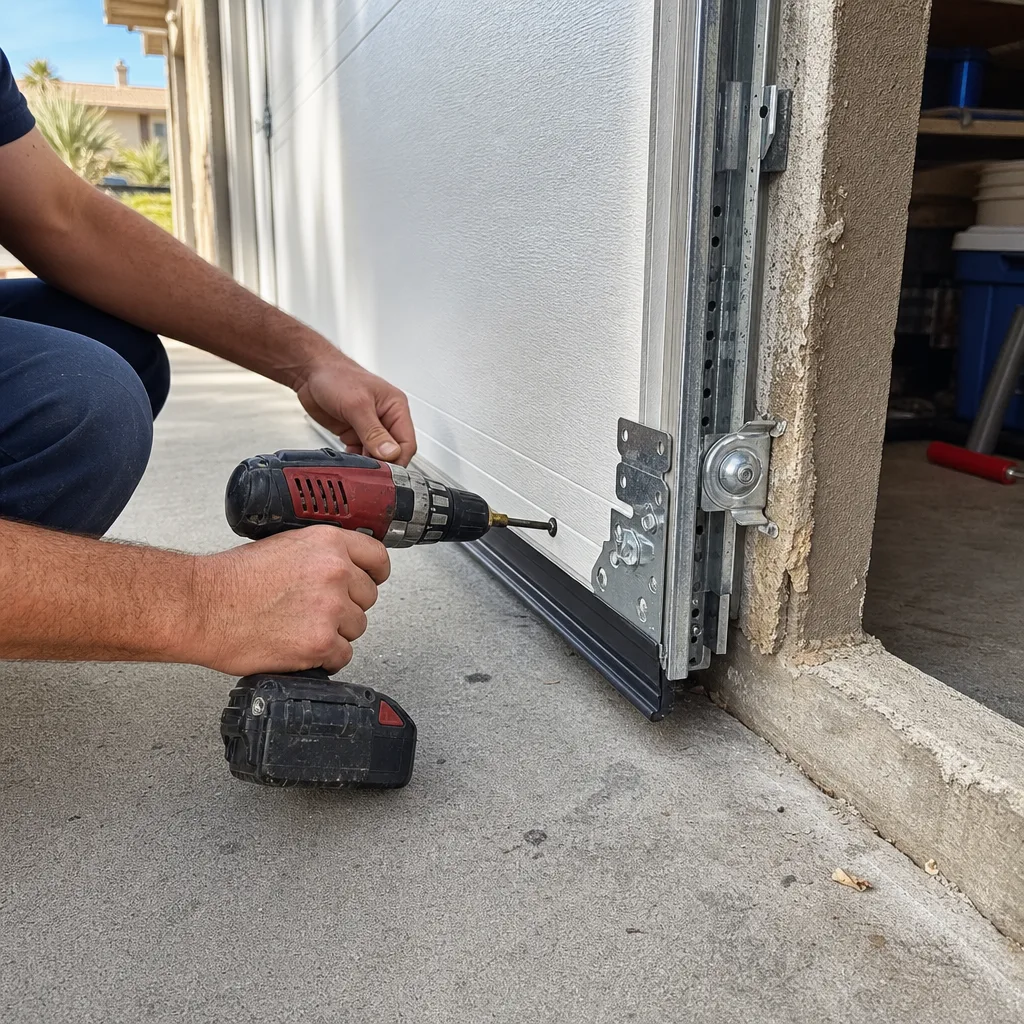
California’s permit requirements for garage door work are narrower than most homeowners assume: like-for-like door replacements don’t need a permit, but header modifications and opener wiring changes do. The torsion-only spring rule is the safety code that matters most, and the document folder is the resale asset that matters most. If the work touches structure, fire separation, or electrical wiring in Palmdale, pull the permit, keep the final sign-off, and keep the photo record. One more note from our side of the counter at Servo Garage Doors Palmdale home: when the scope and price are written down before the work starts, and when the customer receives the photos of what we found, the permit conversation gets simpler. That’s the way we’ve worked since 2015, and it’s the reason our Garage Door Repair in Palmdale work comes with a 365-Day Done Right Promise. If you’re planning a Garage Door Installation in Palmdale or need Garage Door Opener Repair & Installation in Palmdale, call (661) 449-2581 and we’ll start with the paperwork, not a sales pitch.
Written by Marcus Deller, Owner at Servo Garage Doors Palmdale, serving Palmdale since 2015.