
Full 25-point door and opener safety check with every visit - springs, cables, rollers, tracks, and your LiftMaster or Chamberlain opener included
You get a price before we start. It does not change when the truck arrives.
 Before
 After
After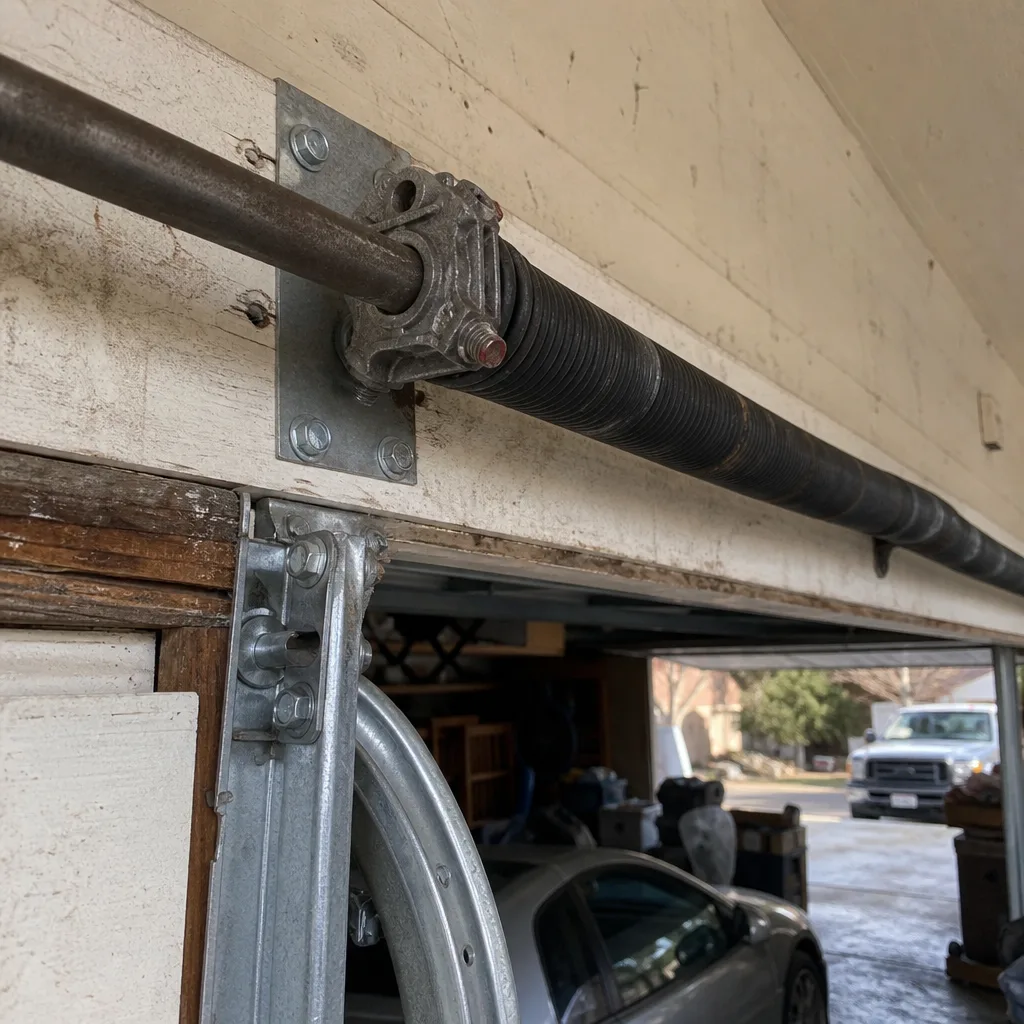 Before
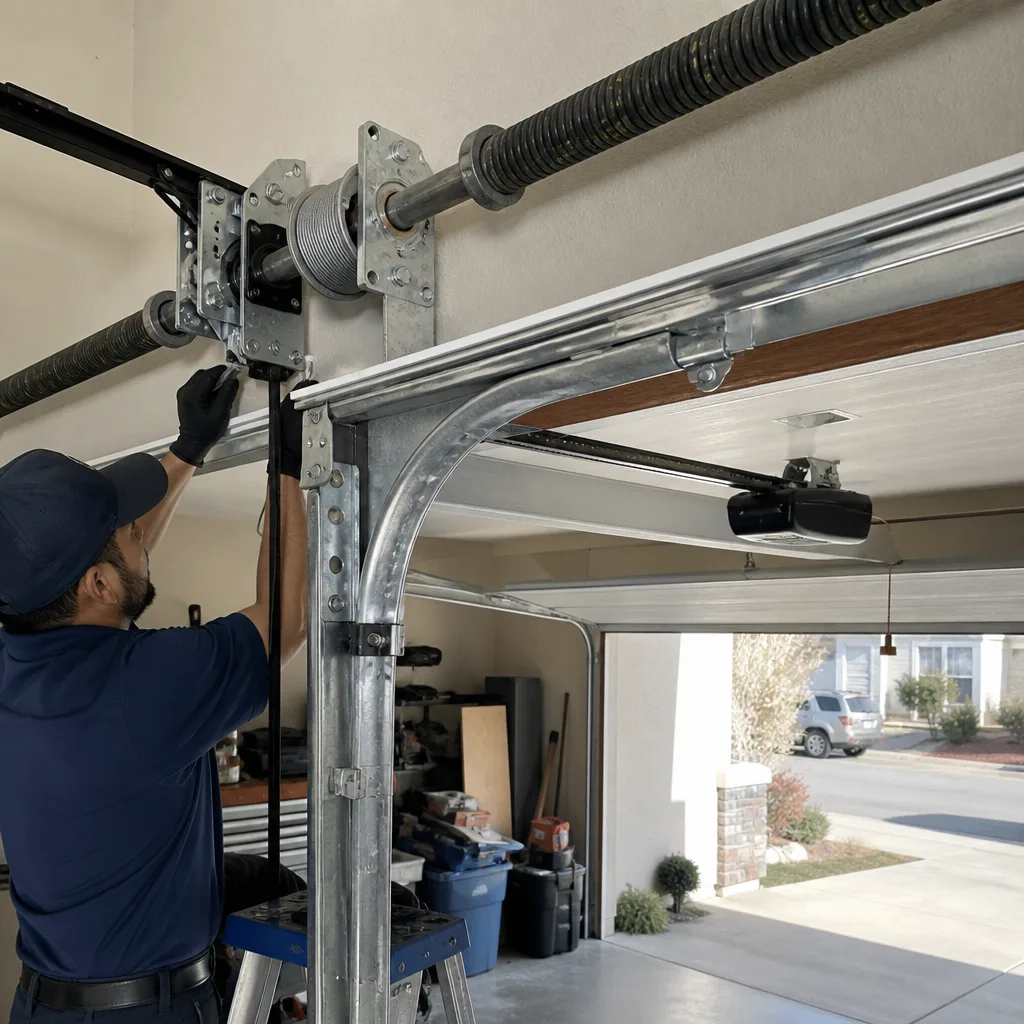 After
After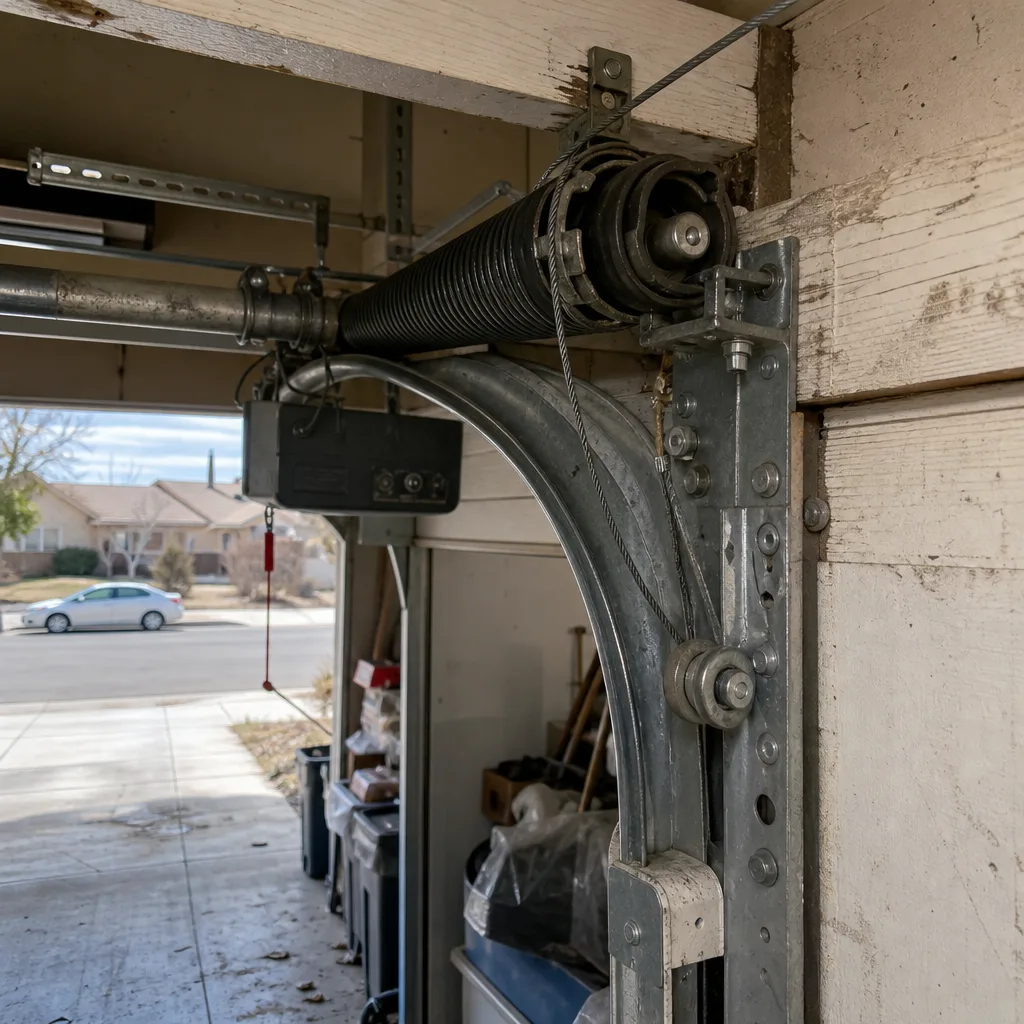 Before
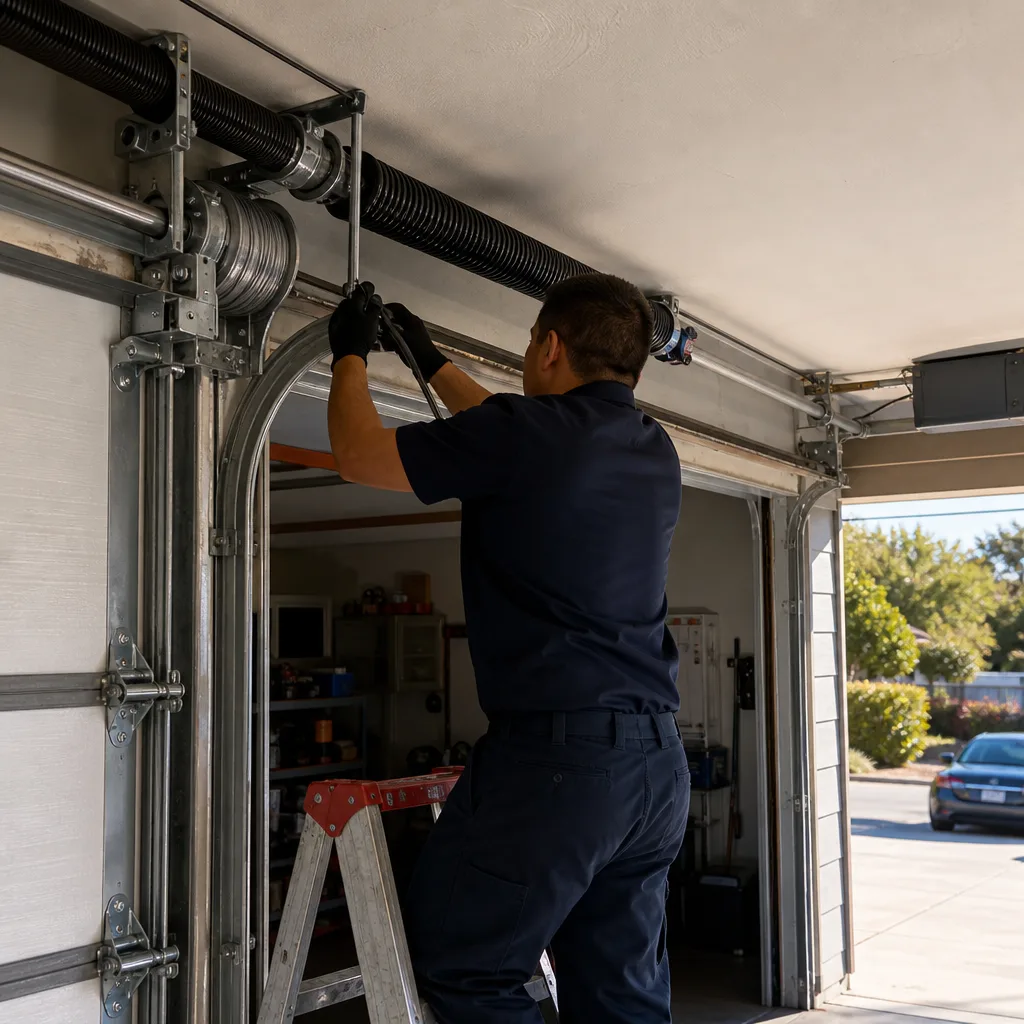 After
AfterWayne Dalton Roller Replacement: The Palmdale Owner’s Guide
We stock and install Wayne Dalton-compatible rollers in Palmdale for $110-$220, including the parts and labor, and we carry the common sizes on the truck so most jobs are done same day. You’ll usually notice the problem as a grinding noise, a door that shudders on the way up, or a roller that’s visibly cracked or wobbling in the track. The part itself is inexpensive; what you’re paying for is matching it to your door’s weight and getting it seated correctly.
Most Palmdale owners discover a failed roller when the door suddenly gets loud or starts hesitating mid-travel. A door that sounded fine in February rarely makes it through an Antelope Valley August without some roller wear, because the heat cycles expand and contract the metal track, which forces the rollers to work harder on every cycle. Let’s get into what actually fails, what it costs, and how to know if this is your problem.
Which Wayne Dalton Models This Applies To
Wayne Dalton builds doors under several series names, and the roller spec isn’t universal across them. The 8000-series and 9100-series doors use a standard 2-inch nylon roller with a 7/16-inch stem, but the 9600-series and the foam-injected 9700-series use a heavier roller with a larger stem diameter to handle the extra door weight. Match the wrong roller to a 9700-series door and you’ll get premature wear at the stem, which is where the roller snaps off the bracket. It’s a common mistake we see from handymen who treat all garage door rollers as interchangeable.
To identify what you need, look for the model number on a sticker near the bottom panel or on the track itself. If the sticker’s gone, measure the stem. The stem is the metal pin that slides into the hinge bracket. Most Wayne Dalton residential doors use a 7/16-inch stem, but some commercial and older models use a 5/8-inch stem. If you measure that, you’ll know what you’re dealing with before anyone touches the door.
On OEM versus aftermarket: Wayne Dalton-branded rollers are fine, but they’re not magic. The nylon rollers we install in Palmdale are rated for the same load and run quieter than the steel rollers that came factory-installed on many older Wayne Dalton doors. We don’t use steel-on-steel rollers as replacements because they chew up the track over time. The nylon option costs a few dollars more and lasts roughly twice as long in the Antelope Valley climate.
Signs Your Wayne Dalton Roller Replacement Is Failing
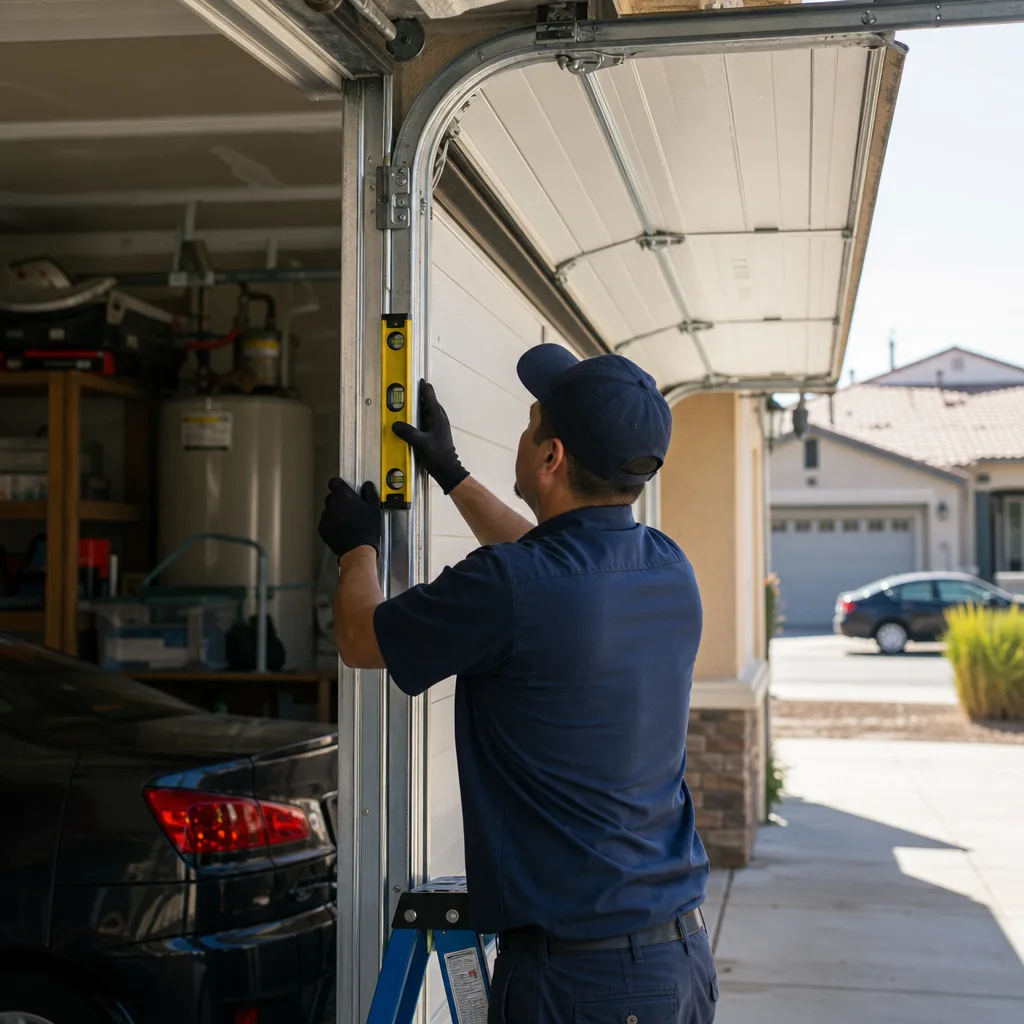
- Grinding or metal-on-metal noise during operation. The nylon sleeve has worn through and the steel inner bearing is now riding directly on the track. Left alone, it’ll groove the track and turn a $110 roller job into a track replacement.
- The door shudders or jerks in one spot. A roller with a flat spot or a seized bearing can’t roll smoothly, so the section hesitates as it passes that point. The door usually still works, which is why this one gets ignored too long.
- A visible crack or flat spot on the roller wheel. In Palmdale’s dry heat, nylon rollers that are exposed to garage temperatures over 110°F for months at a time can develop micro-cracks. Those cracks spread, and eventually the outer sleeve separates from the bearing.
- The door hangs slightly off-level in the tracks. A roller that’s worn down on one side allows the panel to tip, which puts uneven pressure on the other rollers. It’s a domino effect, and by the time you see it, at least two rollers are usually compromised.
- The roller has come out of the track entirely. This usually happens when the stem has bent or the hinge is wallowed out, letting the roller slip free. The door may be jammed in place or making a popping sound as sections pass.
 Before
 After
AfterReplacement Cost & What’s Included
The installed price for roller replacement on a Wayne Dalton door in Palmdale runs $110-$220, and that includes the rollers themselves, the labor to swap them, and a written record of what was replaced. The range depends on how many rollers we’re doing and whether the hinges need attention at the same time. A standard two-car door has 10 to 12 rollers, and doing the full set is what actually quiets the door down; doing one at a time is a losing game because the remaining rollers keep the door out of balance and the new one wears early.
Here’s how that breaks down:
- Roller replacement, single roller: $110-$150 (works when only one has failed and the rest are intact, though this is uncommon - we’ll tell you if it’s a bad investment)
- Roller replacement, full set (10-12 rollers): $150-$220 (the piece-of-mind option; this is what we recommend on doors over 8 years old)
- Rollers plus hinge replacement if needed: add $40-$90 depending on how many hinges are worn
Every price is flat, written, and agreed to before work starts - that’s Clause 1 of The Haven Standard, and we don’t work another way. You’ll also receive a documented photo record of what was found and what was installed, so you can see the failed part for yourself. All roller work carries our 365-Day Done Right Promise: if it’s not right, we make it right.
DIY or Call Us?
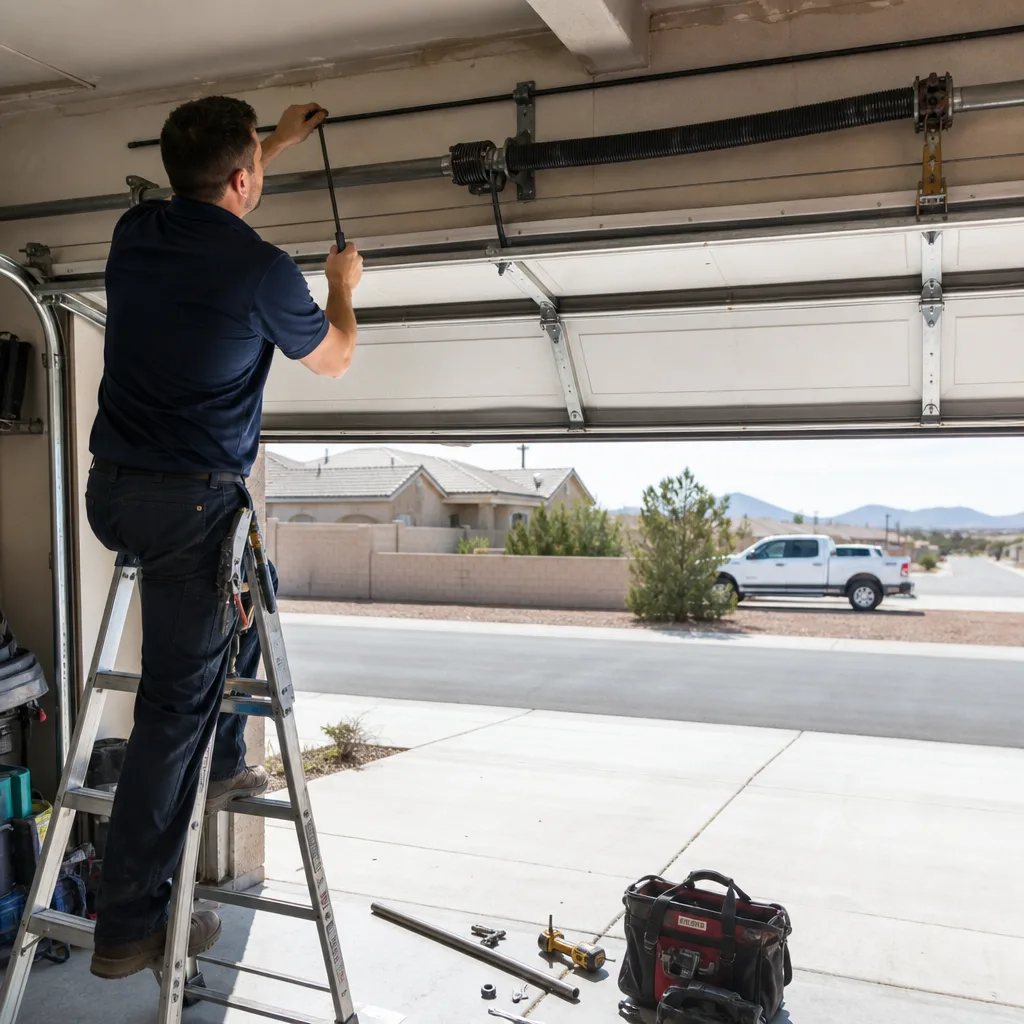
You can safely check the rollers yourself: unplug the opener if you have one, look at each roller from inside the garage, and note whether any are cracked, flat-spotted, or wobbly in the track. That diagnosis costs you nothing and helps you talk to any technician with confidence. What you shouldn’t do is unbolt the roller from the hinge while the door is under tension, because the bottom rollers on a Wayne Dalton door carry the full weight of the bottom section, and the cable tension can shift a panel without warning. That’s a finger-pinch or worse, and it’s exactly what the photo-before-quote rule was built for: know what failed before you touch it.
If you’ve spotted a bad roller, call (661) 449-2581 and we’ll confirm what you’re seeing, quote the range, and schedule the swap. Marcus Deller runs the work personally: name the part, quote the range, then do the work.
FAQs
Steel rollers on a Wayne Dalton door in Palmdale typically last 5-8 years before the bearings start to fail, and nylon rollers last 10-15 years with normal use. The Antelope Valley heat and dust shorten that compared to coastal climates, because airborne grit works its way into the bearing seals. If your door was installed before 2018 and still has the factory steel rollers, you’re on borrowed time. Call (661) 449-2581 and we’ll tell you honestly whether replacement makes sense now.
No, a roller with a flat spot, cracked sleeve, or seized bearing is a replace-only part; there’s no way to rebuild a sealed roller bearing in the field. We’ll always photograph exactly what we found so you’re not taking our word for it. For an exact quote on your door, call (661) 449-2581.
A single roller swap takes about 30-45 minutes once the technician is on site, and a full set on a two-car door is usually done in under two hours. We carry common Wayne Dalton roller sizes on the truck, so there’s no ordering delay for most models. Call (661) 449-2581 to schedule your visit.
We stock 2-inch nylon rollers with 7/16-inch stems, which cover the majority of Wayne Dalton residential doors in Palmdale, plus the heavier roller spec for 9600/9700-series doors. If your door has an unusual measurement, we’ll photograph the existing part and have the correct replacement within one business day. Call (661) 449-2581 and we’ll confirm over the phone.
If your Wayne Dalton door has a roller that’s gone loud or wobbly, call Servo Garage Doors Palmdale at (661) 449-2581 for a flat, written quote before any work starts. We photograph what we find, install what we quote, and leave you a written record of all of it. Serving Palmdale, Quartz Hill, Lancaster, and the surrounding Antelope Valley.
Written by Marcus Deller, Owner, Servo Garage Doors Palmdale at Servo Garage Doors Palmdale, serving Palmdale and nearby areas.