
Last updated September 20, 2026
Full 25-point door and opener safety check with every visit - springs, cables, rollers, tracks, and your LiftMaster or Chamberlain opener included
You get a price before we start. It does not change when the truck arrives.

 Before
 After
After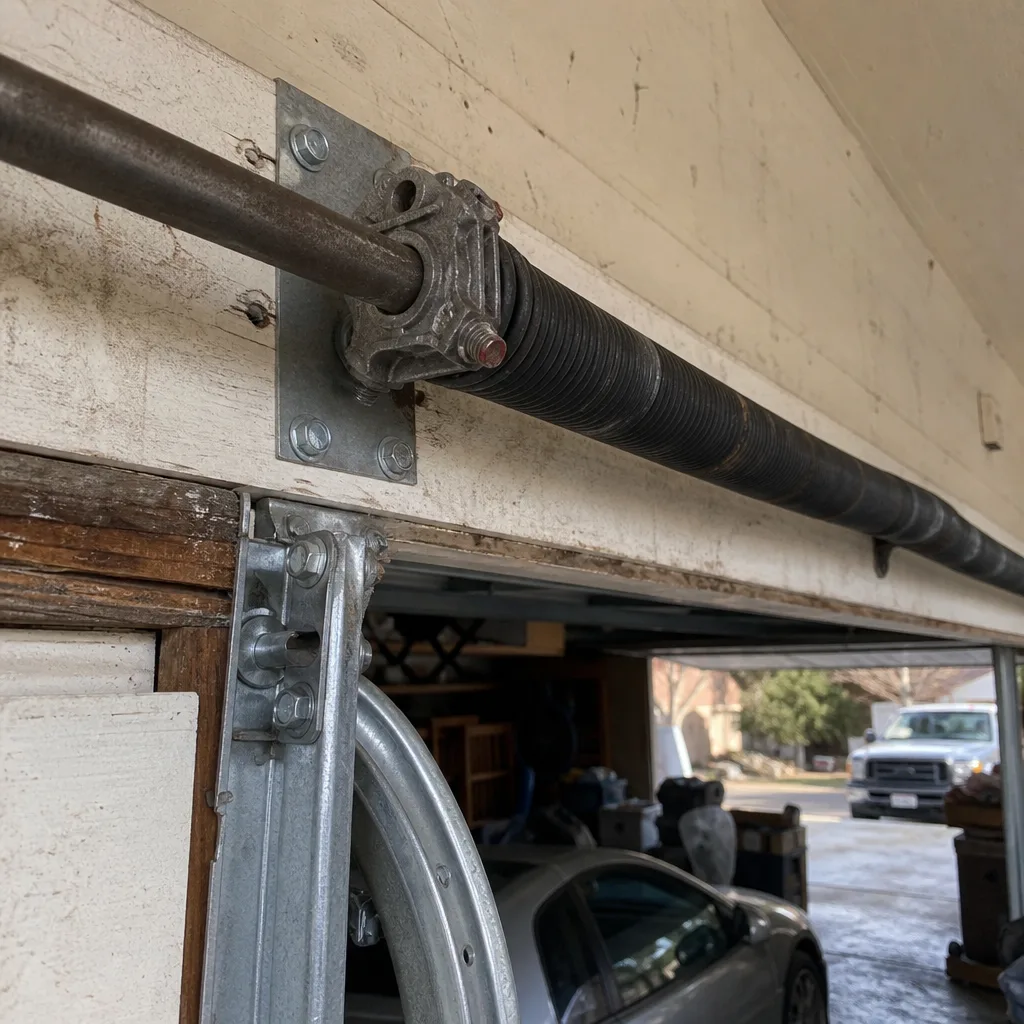 Before
 After
After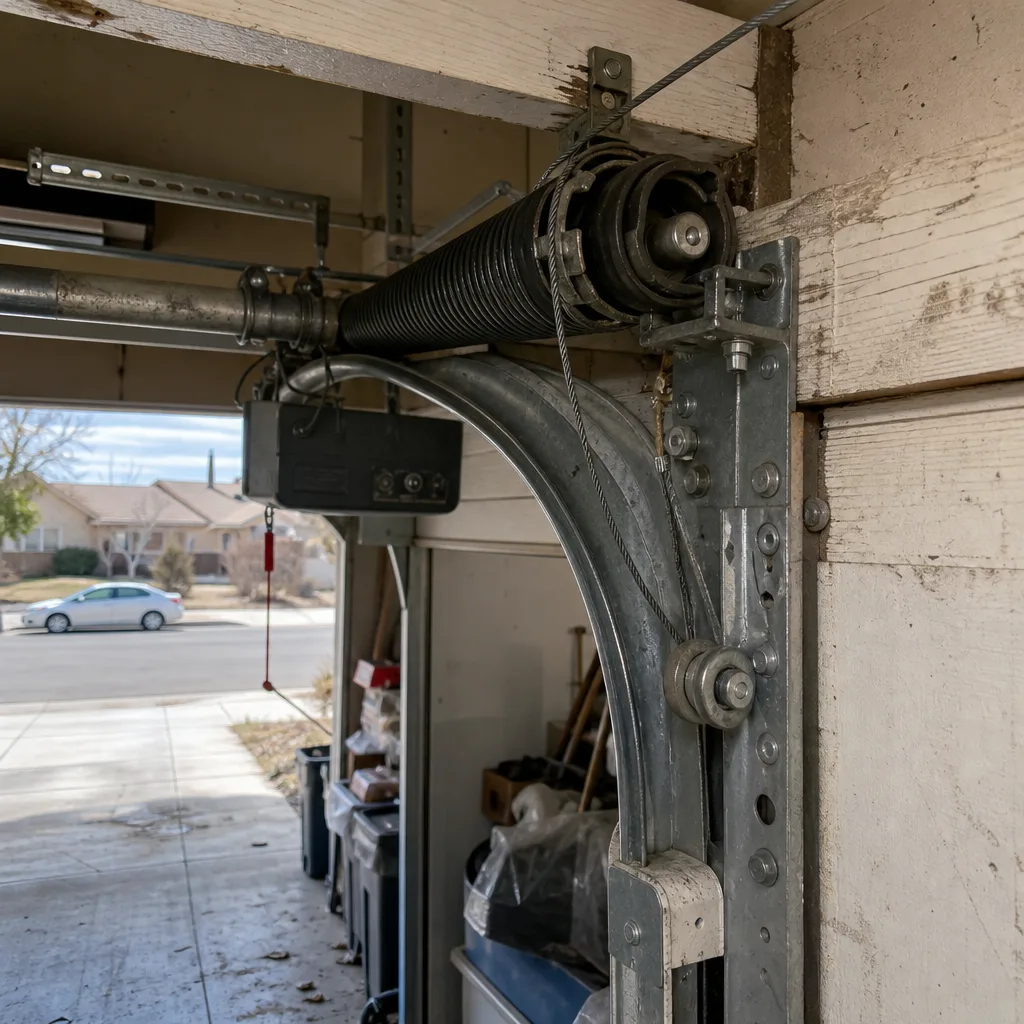 Before
 After
AfterGarage Door Repair Maintenance Checklist for Palmdale Homeowners
Torsion springs account for roughly 40% of all residential garage door service calls, yet on most homeowner checklists they appear last, or not at all. That’s because a torsion spring under tension is the one component most technicians would prefer you not touch until it breaks. This guide inverts that logic. You’ll get a documented inspection protocol for Palmdale homes, organized by the rate at which parts actually fail in this climate, not by what’s easiest to write about.
Quick Answer
A useful garage door maintenance checklist for Palmdale starts with the four components that fail most often in the Antelope Valley: torsion springs, lift cables, bottom seals, and rollers. Inspect these in order every six months, lubricate metal-on-metal contact points twice a year with a silicone or lithium spray, and photograph what you find so the next inspection has a baseline. Palmdale’s UV exposure and fine desert dust mean seals and tracks degrade faster here than in coastal climates.
Table of Contents
- The Failure-Frequency Order: What Breaks First in Palmdale
- Torsion Springs: The 40% Component
- Lift Cables: What a Frayed Strand Actually Tells You
- Bottom Seals: UV Degradation Is a Palmdale Problem
- Rollers and Tracks: Desert Dust Is an Abrasive
- The Opener Circuit Board: Heat Is Not Kind to Logic Boards
- Lubrication Protocol: What to Use and Where
- The Paper-Trail Principle: What to Photograph After Every Inspection
 Before
 After
AfterThe Failure-Frequency Order: What Breaks First in Palmdale
Most maintenance checklists are organized by season: check the weatherstripping in fall, lubricate the hinges in spring. That’s fine for a generic house in a generic climate. It is not how a technician thinks about a garage door, and it is not how Palmdale homeowners should think about theirs.
A technician’s mental model is a ranked list of failure rates. Torsion springs fail first because they carry the entire weight of the door through thousands of load cycles. Cables fail next, usually because a spring failure or rust has already compromised them. Bottom seals fail from UV exposure and ground contact. Rollers wear from friction and grit. Circuit boards fail from heat and power surges. The ranking is not arbitrary; it is a direct function of mechanical stress and Palmdale’s environment.
Here is the list we use when we inspect a door in Palmdale, in the order we check things:
- Torsion springs – the highest-stress component, roughly 40% of all service calls we see
- Lift cables – often damaged when a spring lets go, but also prone to rust and fraying at the drum
- Bottom seals – degraded by Palmdale’s UV index, which runs high most of the year
- Rollers – sand and dust from the high desert work into the bearings and accelerate wear
- Opener circuit board – attic and garage heat in summer can exceed the rated operating temperature of most logic boards
Work through that order and you’re covering the components most likely to strand you, or call us for Garage Door Repair if anything looks off. Skip it and you’re inspecting cosmetic items while the load-bearing parts age out unnoticed.
Torsion Springs: The 40% Component
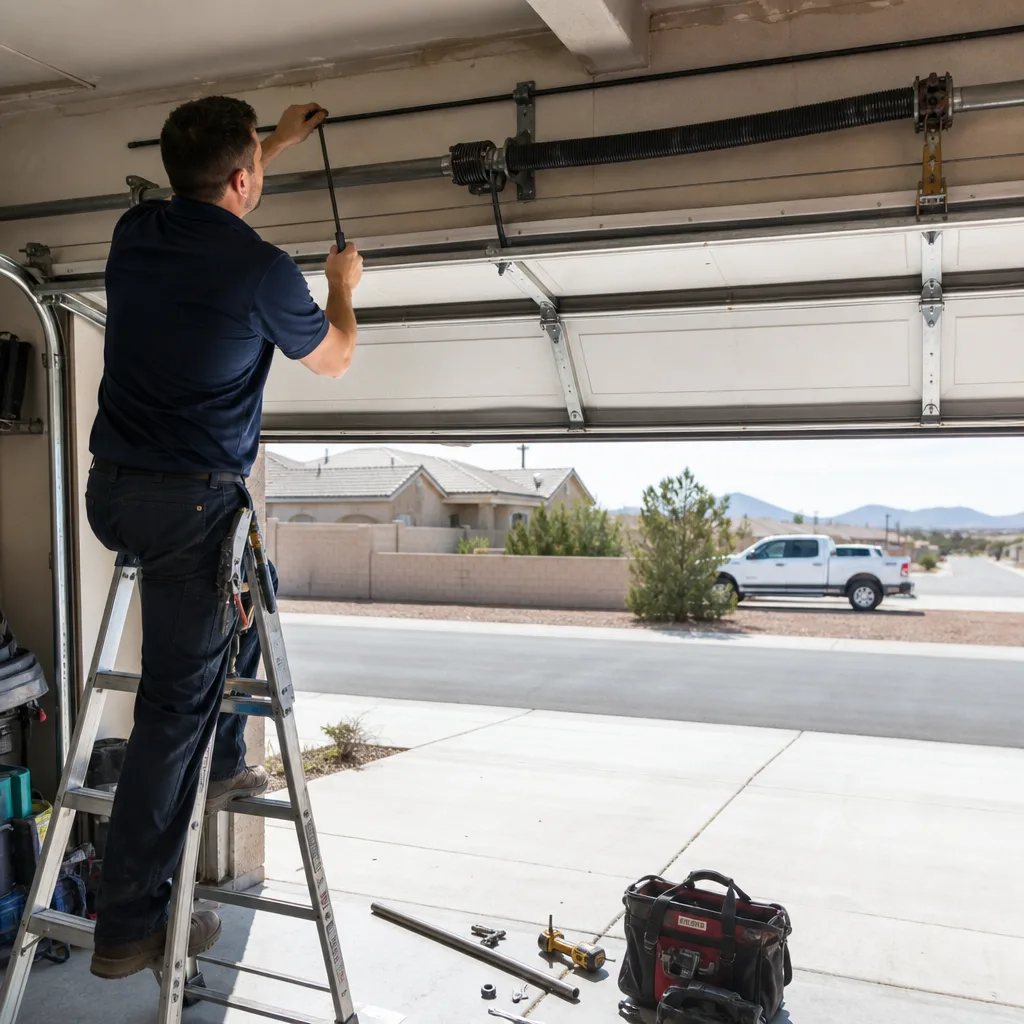
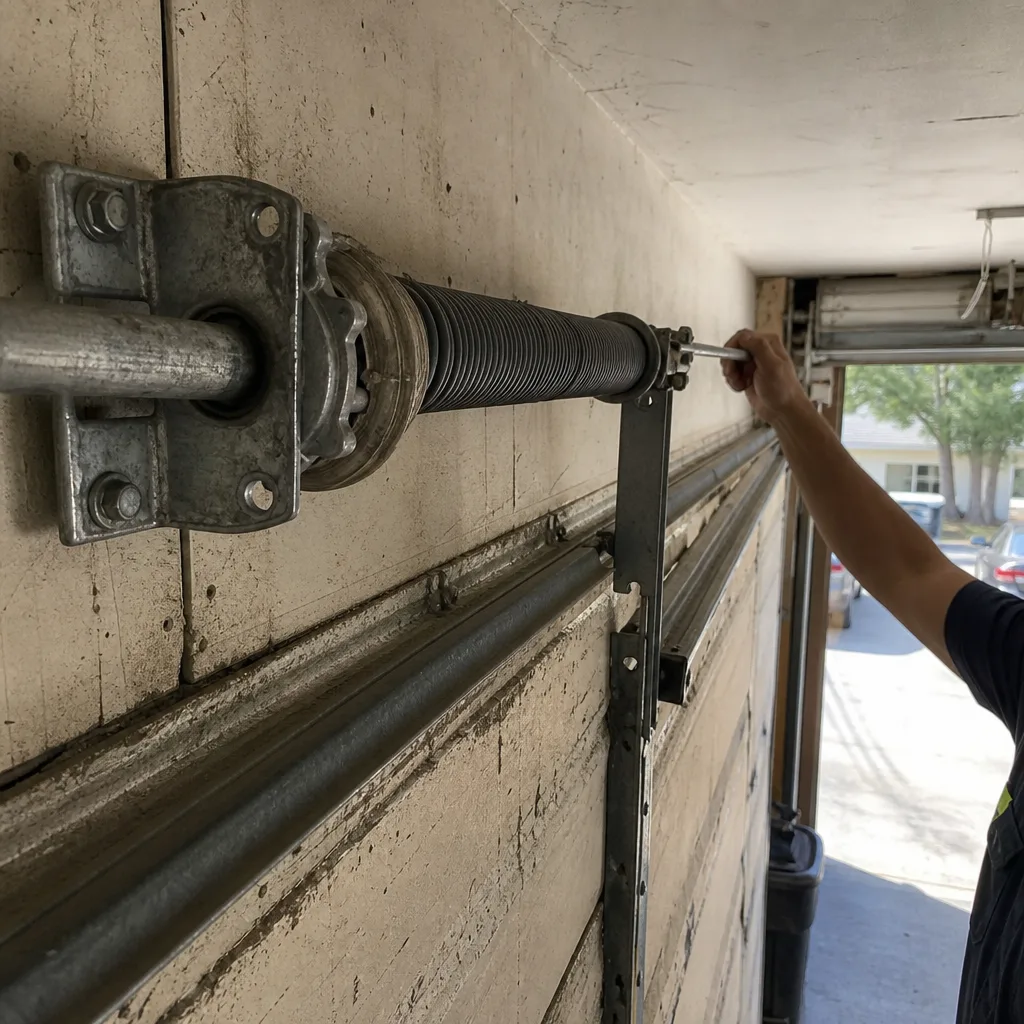
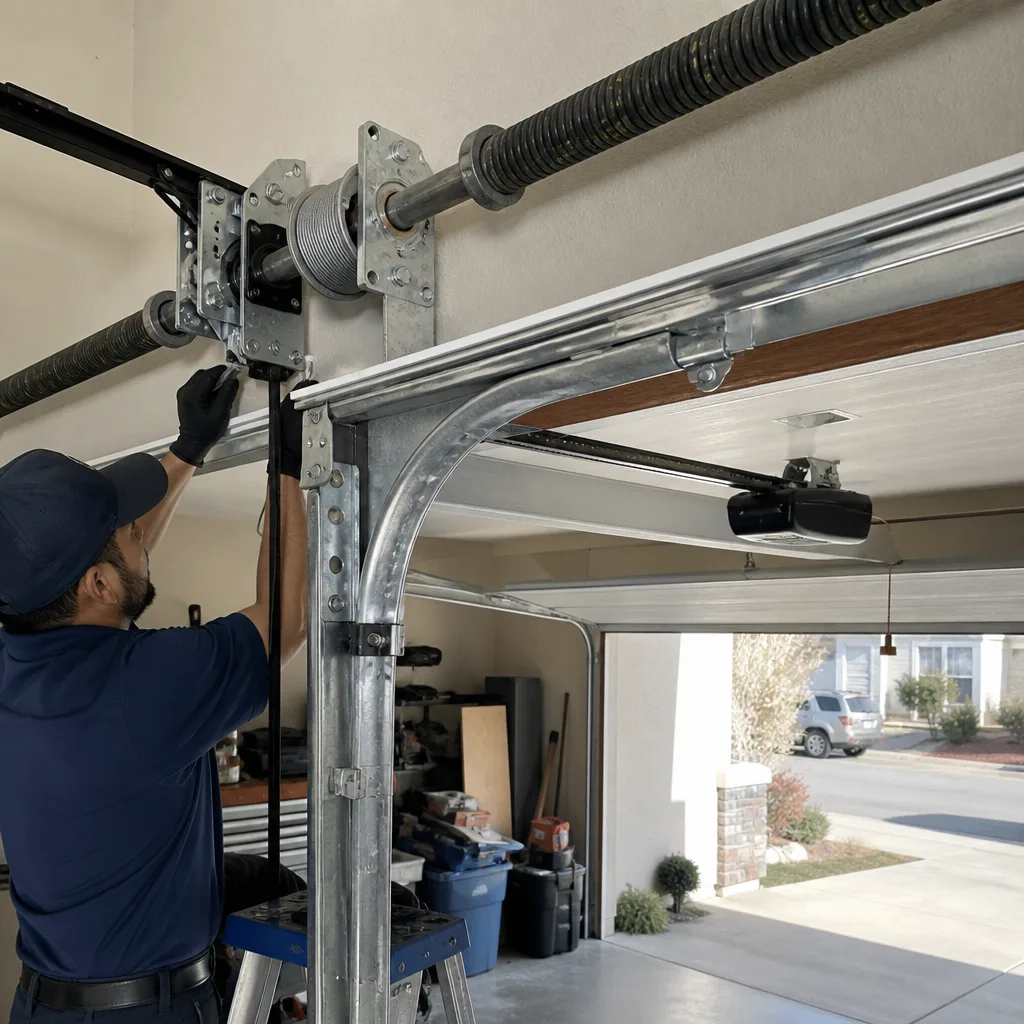
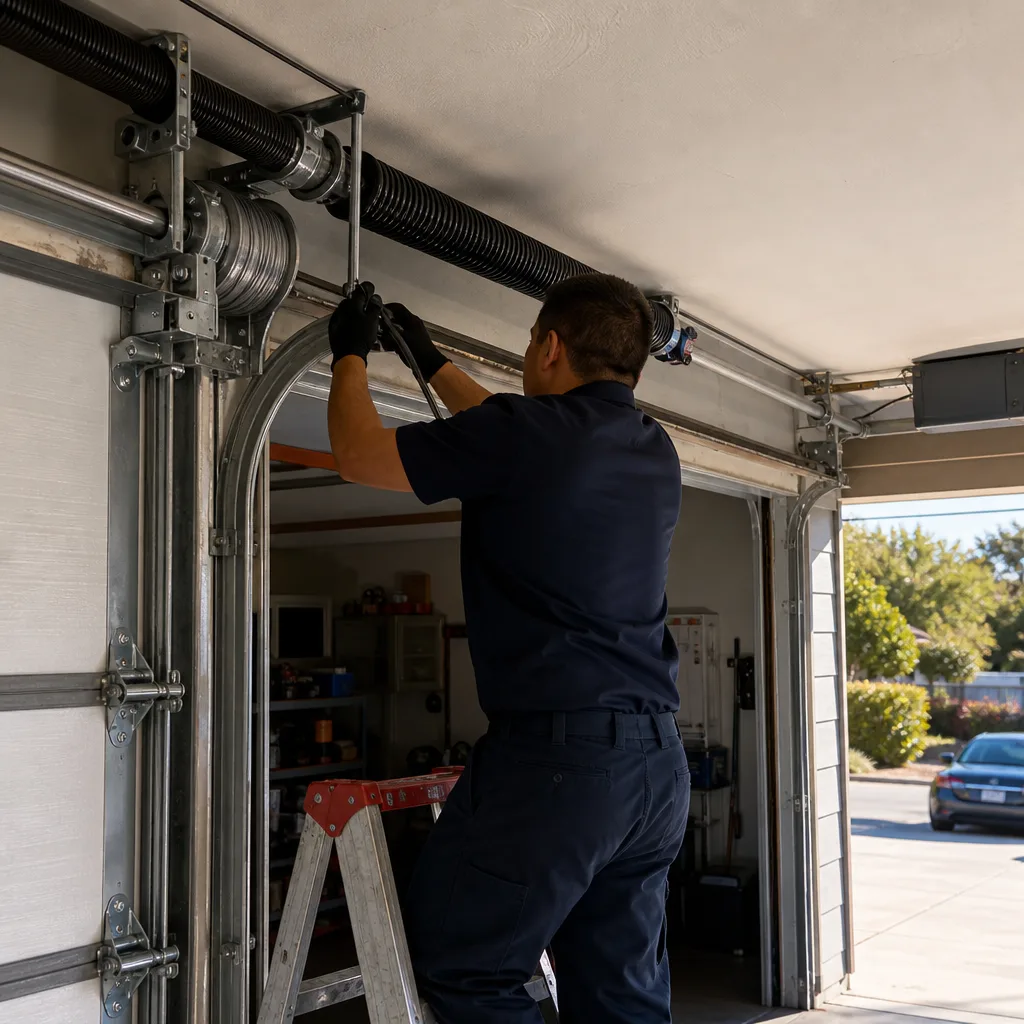
A torsion spring is the coiled steel shaft mounted horizontally above the door opening. It stores mechanical energy by twisting, and that stored energy is what counterbalances the door’s weight so a small opener motor can lift several hundred pounds. When the spring breaks, the door becomes dead weight. Most doors have two springs; if one breaks, the other is usually not far behind.
In our service records across Palmdale, from the tract homes off Rancho Vista Boulevard to the newer subdivisions east of 47th Street East, torsion springs fail most often between 7 and 10 years of daily use. That assumes a standard 10,000-cycle spring. If the original builder installed a lower-cycle spring – and many do – the window shrinks to 4 to 6 years.
What to look for during an inspection:
- A visible gap in the coil where the spring has separated – this means it has already failed and the door should not be operated
- Rust or pitting on the coil surface, which concentrates stress and shortens spring life
- Uneven gaps between coils, or a spring that looks stretched in the middle
- One spring wound tighter than the other (visible as different coil spacing between the two)
Safety note: torsion springs are under extreme tension. The winding and unwinding process requires specific tools and technique. If you see a broken spring or a gap in the coil, do not attempt to adjust or remove it. Call a technician. The danger is not theoretical: a spring releasing suddenly can cause serious injury. This is the one component where inspection stops at observation.
If you hear a loud bang from the garage followed by the door refusing to lift, that’s a torsion spring failure. The fix is a spring replacement, and a good technician will replace both springs at once so the door is balanced evenly. If you want to understand the repair cost in detail, our Garage Door Repair in Palmdale page walks through the pricing ranges and what affects them.
Lift Cables: What a Frayed Strand Actually Tells You
Lift cables are the steel wires that run from the bottom brackets of the door up to the cable drums on the torsion shaft. Their job is simple: they transfer the spring’s torque to the door so it lifts evenly. When a cable frays, it means the cable has been under uneven stress, usually because the spring has weakened or the door is out of balance. A frayed cable is a symptom, not the root cause.
Palmdale’s dry air means rust is less of a problem here than it is in coastal cities, but dust still gets into the cable drums on the shaft. That grit grinds against the cable every time the door cycles. We see cables on Palmdale doors that look clean on the outside but are worn thin where they wrap around the drum.
Inspection steps:
- With the door closed, look at both cables where they attach to the bottom corners of the door. Check for broken strands, kinks, or a flattened section.
- Look at where the cable wraps around the drum above the door. Check for fraying or a groove worn into the drum.
- Run your finger along the cable (gently, with the door closed). Any individual wire strand that sticks out means the cable is compromised.
- Check for even tension: both cables should be taut when the door is down. A slack cable means the door is not level or the spring is failing.
If a cable shows more than a couple of broken strands, replace it. Do not wait for it to snap. A cable failure while the door is open means the door drops on one side, which bends panels, damages tracks, and can injure anyone underneath. This is another component where repair requires releasing spring tension first – which is technician work, not homeowner work.
Bottom Seals: UV Degradation Is a Palmdale Problem
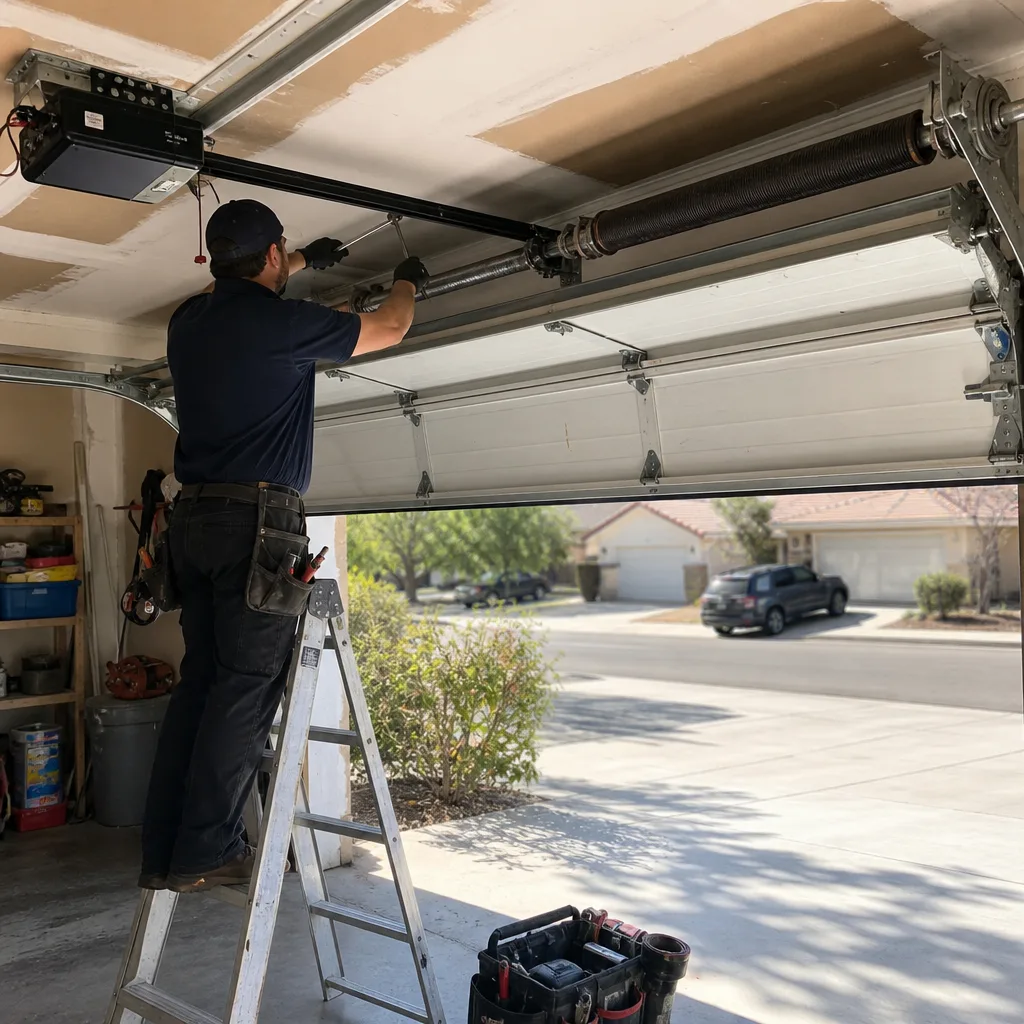
The bottom seal is the rubber or vinyl strip that runs along the bottom edge of the door. It keeps water, dust, and pests out and creates a thermal barrier. In Palmdale, the primary failure mode is not water. It’s ultraviolet light. The Antelope Valley sits at about 2,600 feet of elevation with more than 280 sunny days a year. That UV exposure breaks down the chemical bonds in rubber seals faster than almost any other climate factor.
A seal that’s hardened, cracked, or shrunk at the ends is doing nothing. We’ve measured gaps of a quarter-inch to a half-inch under Palmdale doors where the seal has curled from years of sun. That gap is an open invitation for ants in summer, cold air in winter, and blowing sand every spring when the winds come through the pass.
What to check:
- Press the seal with your thumb. It should flex and spring back. If it feels hard or brittle, it’s past its service life.
- Close the door and look for daylight under the bottom edge. Any visible light means a gap.
- Check the ends of the seal. Shrinkage starts there because the ends get the most direct sun.
- If the seal is held in a retainer channel, pull it out a few inches and check for dry rot on the hidden section.
Bottom seals are inexpensive and relatively easy to replace – this is one maintenance item most homeowners can do themselves with a utility knife and a new seal. Expect to replace it every 2 to 3 years in Palmdale’s sun. If the door has a bottom seal that is more than 4 years old, it’s already past due.
Rollers and Tracks: Desert Dust Is an Abrasive
Rollers are the small wheels attached to the sides of each door panel. They ride inside the vertical and horizontal tracks and carry the door through its travel. In a clean environment, rollers last a long time. Palmdale is not a clean environment. The high desert produces fine dust that settles on everything, and that dust works into the roller bearings where it acts as an abrasive paste.
We see rollers in Palmdale garages that haven’t failed outright but have flat-spotted from grit accumulation. A flat-spotted roller doesn’t roll smoothly through the track; it slides. That increases friction, which increases load on the opener, which shortens the life of the drive gear and the circuit board. One neglected roller can cascade into several bigger problems.
Inspection steps:
- Open the door halfway and look at each roller from the side. Nylon rollers with visible cracks or chunks missing are done.
- Spin each roller by hand (the door is stationary). It should turn freely. If it binds, grinds, or wobbles, the bearing is contaminated.
- Look at the track itself where the rollers ride. A polished groove or dark wear line means metal-on-metal contact from a failing roller.
- Check the vertical tracks for sand buildup at the bottom curve. That’s where Palmdale dust collects and gets packed in by the roller.
Nylon rollers with sealed bearings are the right replacement for Palmdale. They run quieter and resist grit better than steel rollers. If your door has steel rollers and they’re more than 5 years old, plan on replacing them. Track cleaning is a maintenance item you can do: wipe the inside of the track with a dry rag, then treat the track with a light silicone spray. Do not use grease. Grease in a Palmdale garage becomes a dust magnet within a week.
The Opener Circuit Board: Heat Is Not Kind to Logic Boards
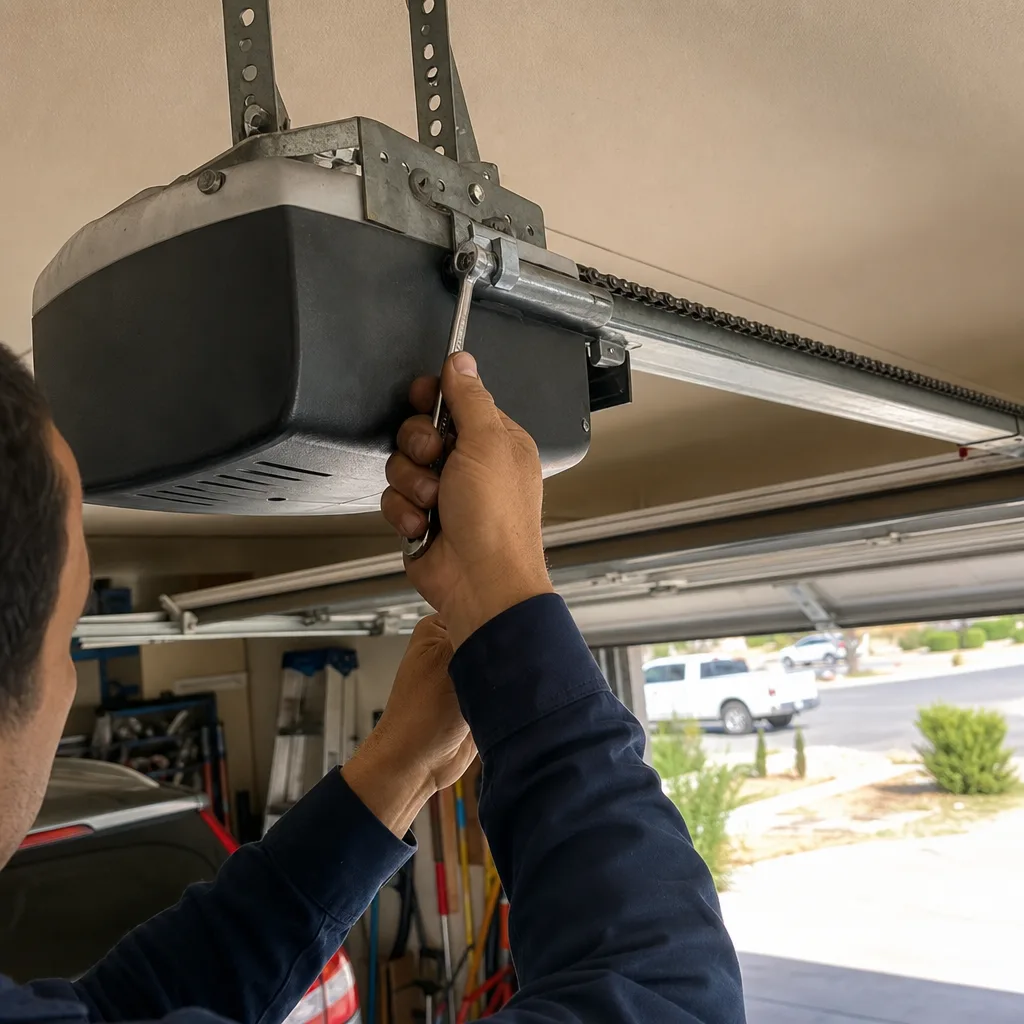
The circuit board, or logic board, is the electronic brain inside the garage door opener motor housing. It receives signal from the wall button and remotes, controls the motor’s direction and speed, and monitors the safety sensors. It is a printed circuit board covered in capacitors, resistors, and a microcontroller. And it sits inside a metal housing in a garage that routinely exceeds 110°F in Palmdale summer.
Heat is the enemy of electronics. Every 18°F above room temperature roughly halves the life expectancy of electrolytic capacitors, the components most likely to fail on a garage door logic board. A Palmdale garage in August can hit 120°F or higher. Over a decade of summers, that thermal cycling degrades solder joints and capacitor internals. We replace more opener circuit boards in Palmdale July-September than in any other three-month window.
What to check:
- If the opener responds intermittently to the wall button or remote – works sometimes, not others – the logic board is a prime suspect
- If the opener starts the door moving and then stops immediately, the current-sensing circuit on the board may have drifted
- If the opener hums but won’t move, the board’s relay may have failed while the motor is still fine
- If the safety sensors are clean and aligned but the door won’t close, the board may not be processing the sensor input correctly
Circuit board diagnosis requires a multimeter and a wiring diagram. This is not a homeowner repair. If the symptoms above persist after checking the sensors and the wall button, the board may need replacement or the opener may be at end-of-life. For opener-specific issues, our Garage Door Opener Repair & Installation in Palmdale page covers what’s repairable versus what’s replaceable, including LiftMaster, Chamberlain, and Genie models.
Lubrication Protocol: What to Use and Where
Lubrication is the maintenance task every checklist mentions and most homeowners do wrong. The wrong lubricant in the wrong place causes more problems than no lubricant at all. Here’s the Palmdale-specific protocol.
Use a silicone spray or white lithium grease. Never WD-40. WD-40 is a penetrating oil and solvent, not a lubricant. It displaces moisture and then evaporates, leaving the metal dry and vulnerable. In Palmdale’s dry heat, metal-on-metal contact points need a lubricant that stays in place and doesn’t attract dust. Silicone spray is the right choice for most applications because it’s thin, penetrates without collecting grit, and tolerates a wide temperature range.
Where to lubricate, in order:
- Roller bearings – a short spray at each roller’s axle, wiping away any that runs
- Hinges – the pivot points between panels, where the door flexes as it travels
- Springs – if you have a torsion spring, a light coat along the coil helps prevent surface rust. If you have extension springs (on the sides), spray along the length of each spring.
- Bearing plates – the end bearings where the torsion shaft enters the mounting plates
- The opener rail – if it’s a chain or screw drive, use the lubricant specified by the manufacturer. Belt drives typically need no lubrication.
Do not lubricate the track. The track is designed for the roller to roll on, not slide. Lubricating the track makes the rollers slide, which causes flat spots. Do not spray lubricant on the belt or chain if your opener uses a belt; belt drives are self-lubricating by design and adding lubricant degrades the belt material.
Frequency in Palmdale: twice a year, spring and fall. If your garage faces west and catches afternoon sun, you may need to lubricate every four months because heat accelerates lubricant breakdown. If you open and close the door more than four times a day, err toward more frequent lubrication.
The Paper-Trail Principle: What to Photograph After Every Inspection
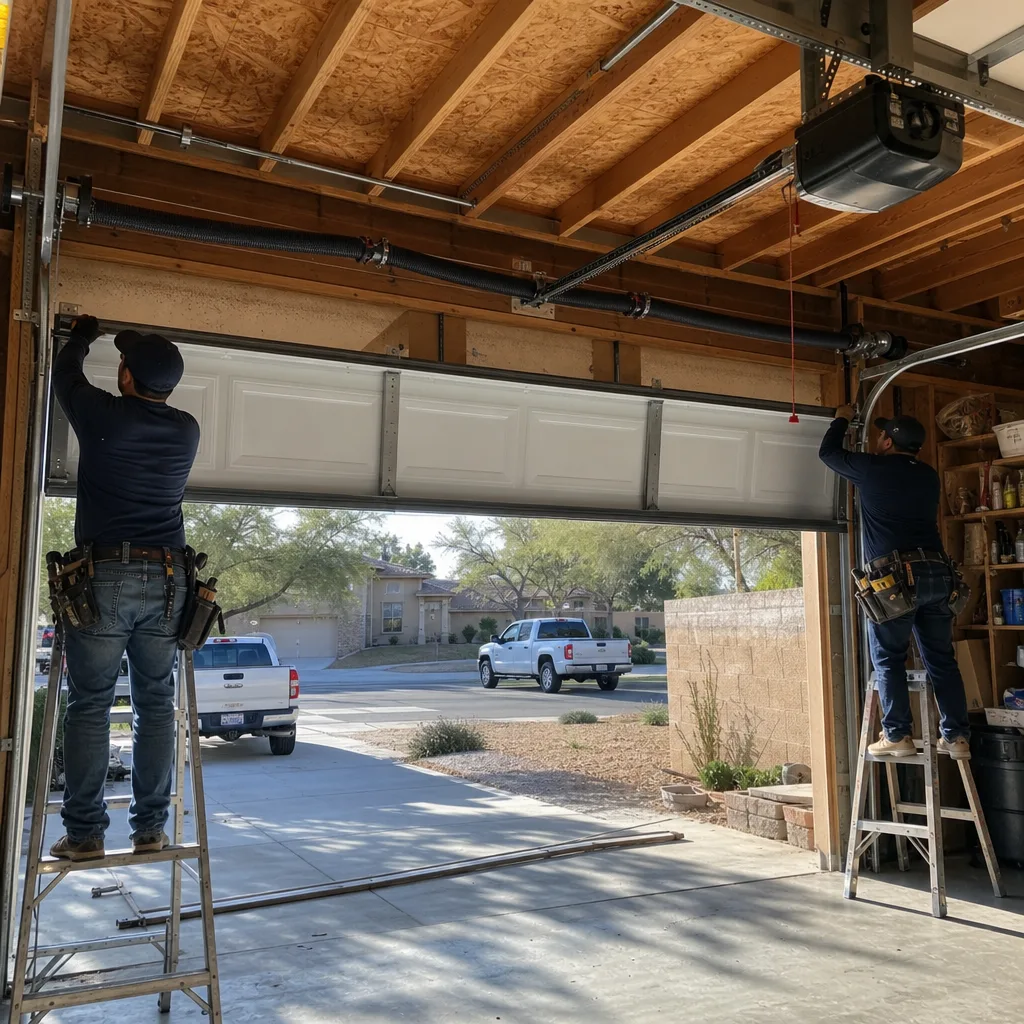
Most homeowners inspect a garage door, find nothing alarming, and move on. That’s a missed opportunity. The next inspection will ask “has this cable always looked like that?” and without a record, there’s no way to answer.
This is the same principle we apply to our own service calls, codified as Clause 4 of The Haven Standard: photograph the component before quoting a replacement, so the customer sees what the technician sees. You can apply the same logic to your own maintenance. Take photos now. Compare them in six months. The comparison is the diagnostic, not the memory.
A documented inspection record for Palmdale homeowners should include:
- Torsion spring coils – a close-up of both springs, showing coil spacing and any surface rust
- Lift cables at the drum and at the bottom bracket – these are the two failure points that matter
- Bottom seal – photographed from inside and outside, especially the corners
- Rollers – one photo per panel side, so you can compare bearing wear over time
- The circuit board – a clear photo of the board inside the opener housing, showing any bulged capacitor tops or discolored solder joints
- Date stamp – write the date on a piece of paper and include it in each photo, or use a photo app with automatic date recording
Store these in a folder on your phone or computer labeled “Garage Door [Year]”. When you call a technician, pull up the folder. The technician can see the progression, and so can you. That’s the difference between “something seems wrong” and “the spring showed a rust patch in March that has doubled by October.” Specific observations get specific answers.
Common Mistakes to Avoid
- Lubricating the track. The track is not a lubrication point. Adding lubricant to the track makes rollers slide, which causes flat spots and eventually roller replacement. If the door is noisy, the problem is the rollers or hinges, not the track.
- Using WD-40 on the springs and rollers. WD-40 is a solvent, not a lubricant. It cleans and then evaporates, leaving metal dry. In Palmdale’s heat, dry metal on metal wears faster. Use silicone or lithium spray.
- Ignoring a frayed cable because the door still works. A frayed cable is a countdown, not a cosmetic issue. When it fails, the door drops on one side and can bend panels or injure someone. The door still working is not evidence the cable is fine.
- Replacing only one torsion spring. Springs are rated for a certain number of cycles. If one has failed, the other has gone through the same cycles and is at the same age. Replacing one means an unbalanced door and another service call soon. Replace both.
- Forgetting the photo record. Without a baseline photo, every future inspection is guesswork. You’ll ask “has it always looked like that?” and have no way to answer. Photos turn a vague sense of something being wrong into a specific comparison.
- Adjusting the travel limits to fix a door that’s not closing fully. The travel limit is the opener’s setting for how far the door travels. If the door suddenly isn’t closing fully, the problem is usually the bottom seal, a track obstruction, or a failing limit switch, not the setting. Changing the limit masks the real problem.
- Running the door with a broken spring. This is the most dangerous item on this list. A broken torsion spring means the door has no counterbalance. The opener will strain and the door can fall. If you hear the bang, don’t test the door. Call for service.
When to Call a Professional
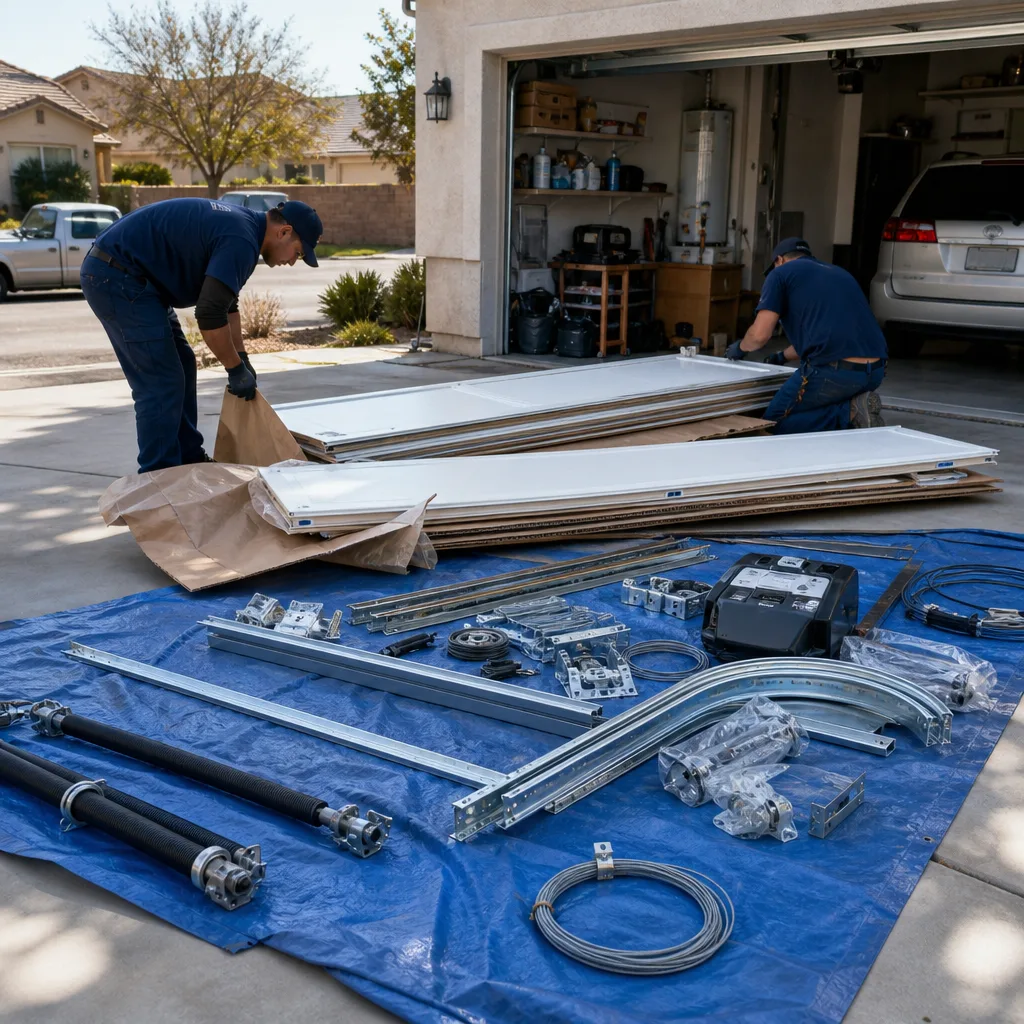
Some maintenance items are genuinely DIY: replacing the bottom seal, cleaning the tracks, lubricating the hinges, photographing the components. Others are not. Torsion spring replacement, cable replacement, and any work involving releasing spring tension should be left to a trained technician with the right winding bars and experience. Circuit board diagnosis requires a multimeter and the manufacturer’s wiring diagram. If you hear a loud bang from the garage, if the door won’t stay open, or if a cable is visibly frayed, stop using the door and make the call. Servo Garage Doors Palmdale offers free estimates in Palmdale. Call (661) 449-2581 and a person answers, 24/7.
Frequently Asked Questions
Twice a year. Spring and fall are the natural times because they bookend the two stress seasons: summer heat and winter cold (cold for Palmdale, which still means overnight lows near freezing). If your garage faces west or you use the door more than four times a day, inspect quarterly. A visual inspection takes 15 minutes and costs nothing. The cost of skipping it is discovering a frayed cable or broken spring by having it fail on you.
A routine maintenance visit in Palmdale typically runs $85 to $150 depending on what’s included. That covers inspection, lubrication, minor adjustments like limit settings and chain tension, and a written summary of findings. Replacement parts are quoted separately, and at Servo Garage Doors Palmdale, every part is quoted with a flat, written price before any work starts – that’s Clause 1 of The Haven Standard. Call (661) 449-2581 for an exact quote on a maintenance visit; estimates are free.
Yes, and you should. Close the door, then pull the red emergency release cord to disconnect the opener. Lift the door manually to about waist height and let go. A properly balanced door will stay in place or move very slowly. If it drops, the springs are weak or broken and need service. If it rises on its own, the springs are over-wound. Reconnect the opener by running it until it re-engages. This test is safe because you’re not touching the springs themselves.
A travel-limit test checks whether the opener stops the door at the correct full-open and full-close positions. Close the door with the opener and watch the bottom edge. It should meet the floor cleanly and the opener should stop immediately – no continued pressure, no reversal. Then open it fully and check the door stops level with the top of the opening. If either position is off, the limit setting may have drifted, but before adjusting anything, check for obstructions and worn parts. Limit drift is often the symptom of a failing limit switch on the circuit board, not a setting that needs a quarter-turn.
Standard steel rollers last 5 to 7 years in Palmdale’s dust. Nylon rollers with sealed bearings last 10 to 15 years because the sealed bearing keeps desert grit out of the rolling surface. If your door has steel rollers and you hear grinding or the door feels rough when opened manually, inspect the rollers. Replacing steel with nylon is an upgrade that pays for itself in quieter operation and less stress on the opener.
Palmdale follows California Building Code, which requires garage doors to have auto-reverse mechanisms that stop and reverse the door if the safety sensors detect an obstruction. That’s a code requirement, not an option. During any maintenance routine, test the auto-reverse: place a 2×4 flat on the ground in the door’s path and close the door. It should reverse within two seconds of contact. If it doesn’t, the sensors or the logic board need service. This test protects people and keeps the door compliant. If you’re replacing a door, see Garage Door Installation in Palmdale for what a code-compliant installation includes.
The Bottom Line
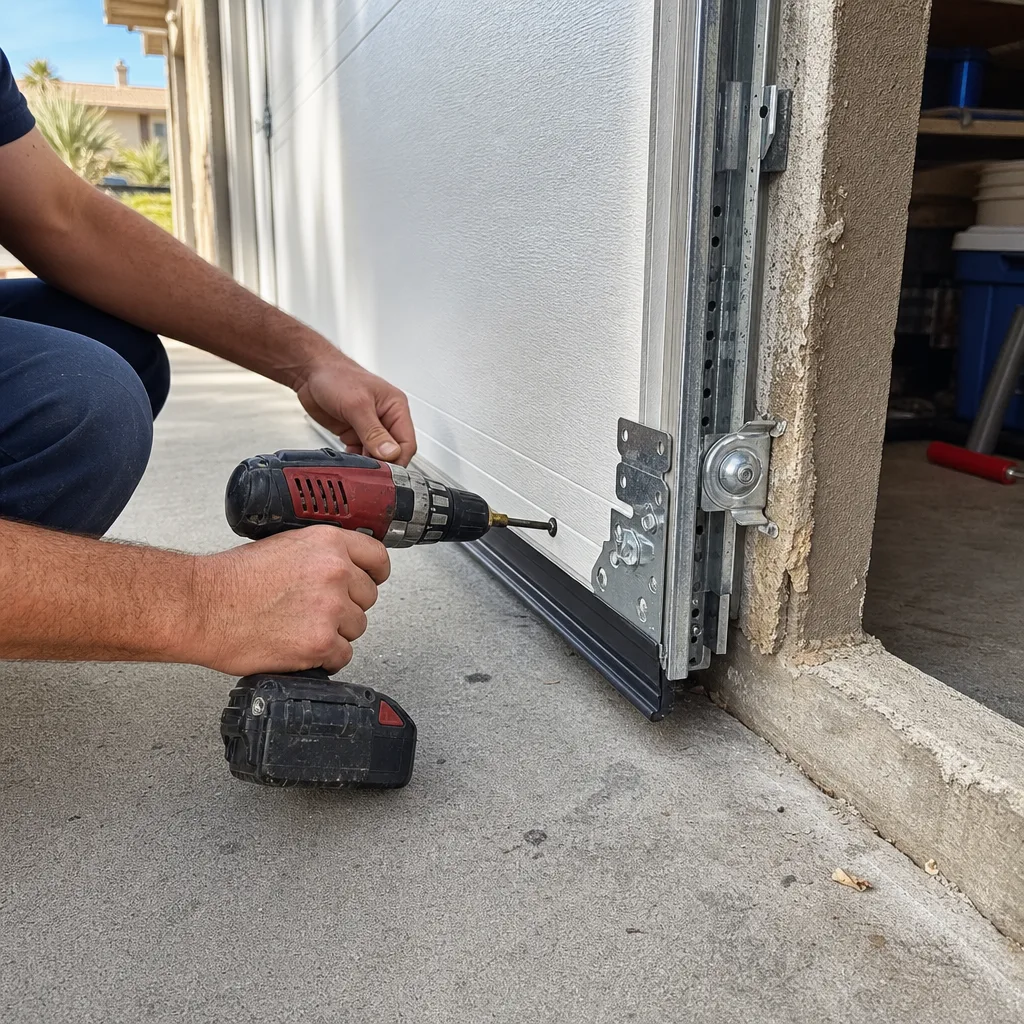
A garage door maintenance checklist should be organized by failure rate, not by season. In Palmdale, that means torsion springs first, then cables, seals, rollers, and the opener circuit board. Twice-yearly lubrication with silicone spray, an annual balance test, a working auto-reverse check, and a photo record after every inspection will catch most failures before they strand you. When something needs a technician, get a written price before work starts. Palmdale homeowners who inspect in this order, document what they find, and act on what the documentation shows will spend less money on repairs and less time with a door that won’t open. For a professional inspection or repair, Servo Garage Doors Palmdale home is here, and the phone is answered by a person, not a recording.
Written by Marcus Deller, Owner at Servo Garage Doors Palmdale, serving Palmdale since 2015. For more guides & resources, visit our blog.